65% of Dominicans fear their identity could be used to commit crimes
6 minutes read
- According to TransUnion’s latest Fraud Trends Report, 37% of those surveyed in the country say they have recently been targeted by fraud through email, the internet, phone calls or text messages.
- Money or gift card scams were the most frequently reported type of fraud among those who said they had been targeted by these schemes.
- 78.5% of suspected digital fraud activity recorded among TransUnion customers in Latin America during the first half of 2026 took place during login processes.
Santo Domingo, Dominican Republic, November 2026.- Dominicans are increasingly concerned about identity theft as digital fraud moves beyond the traditional theft of credentials and turns more and more to manipulating trust, misusing identities and deploying sophisticated impersonation tactics. According to TransUnion’s H2 2026 Update: Top Fraud Trends report, 65% of Dominicans fear their identity could be used to commit crimes.
The report found that close to four in ten Dominicans (37%) said they had been targeted by fraud through email, the internet, phone calls or text messages in the past three months, while 9% said they had fallen victim to these schemes.
Among those who said they had been targeted, the most common types of fraud were:
- Money or gift card scams (24%).
- Smishing (22%), using text messages designed to deceive people and obtain personal information.
- Credit card fraud or unrecognised charges (22%).
- Scams involving third-party sellers on legitimate e-commerce platforms (22%).
- Vishing (22%), using fraudulent phone calls intended to obtain confidential information.
- Phishing (18%), using fraudulent emails, websites or links designed to steal personal information.
These results show that criminals continue to take advantage of trusted communication channels and social engineering tactics to deceive consumers. Through messages that create urgency, by impersonating legitimate organisations or by exploiting people’s trust, fraudsters manage to persuade their victims to share personal information, approve transactions or transfer money.
In the same TransUnion consumer survey, 49% of Dominicans said the cyber threat that worries them most is identity theft, followed by credit card or payment fraud (48%) and data breaches (38%).
The channels we trust are becoming fraud vectors
Although organisations have invested significantly over the past decade in strengthening their authentication controls, criminals have evolved their tactics in response. In fact, 58% of business leaders recently surveyed by TransUnion worldwide said they were very or extremely concerned that fraud risks are evolving faster than their organisations’ ability to detect and prevent them.
Dominican consumers are also alert to the methods criminals use to obtain personal information. Asked which forms of identity attack worry them most, the leading answers were:
- Fake social media profiles (47%).
- Email phishing (45%).
- Exposure of personal information in data breaches (43%).
These concerns reflect a growing understanding that fraud usually begins long before any financial loss or account takeover occurs. Consumers recognise that criminals often gather personal information, build trust or obtain credentials before attempting to impersonate identities and access digital accounts.
“Trusted communications are often the first step towards committing fraud,” said Miguel Rivera, senior director of Fraud and Identity Solutions for Latin America at TransUnion. “Criminals use familiar channels and convincing messages to create urgency, earn trust or persuade people to share information, approve an action or transfer money. Businesses therefore need to treat communications as an integral part of the chain of trust, and not merely as marketing or service channels. Connecting communication events with identity, device and account behaviour signals makes it possible to identify elevated risks before they turn into losses.”
Artificial intelligence is accelerating the scale and sophistication of fraud
TransUnion identifies AI-driven adaptive attacks as one of the leading global fraud trends, and 42% of business leaders surveyed worldwide said the growing scale and sophistication of fraud is placing significant or severe pressure on their organisations.
Artificial intelligence has allowed criminals to increase the effectiveness of their attacks at unprecedented speed and scale, to the point of industrialising much of the fraud value chain. It also lowers the cost of running complex schemes and makes it easier to exploit legitimate processes in order to extract assets and conceal illicit gains.
“Artificial intelligence is not only creating new kinds of fraud; it is also making existing fraud faster, cheaper, more convincing and far more scalable,” Rivera said. “This technology has changed the economics of fraud by allowing criminals to automate activities that historically required a significant investment of time and human resources. From generating convincing content and synthetic identities to personalising attacks and interacting with victims, AI is increasing the precision, scale and adaptability of fraud campaigns,” he added.
In Latin America, most suspected digital fraud activity occurs during login
TransUnion’s financial services customers in Latin America recorded the highest rate of suspected digital fraud during the first half of 2026, at 10.4%, reflecting the growing challenges associated with digital banking, credit granting, real-time payments and mobile financial services.
TransUnion’s research also found that 78.5% of suspected digital fraud activity recorded among its customers in Latin America during the first half of 2026 occurred during login processes. That figure is significantly higher than the 53.0% recorded globally. The trend suggests that cybercriminals are taking advantage of compromised credentials, stolen identities and account takeover techniques to impersonate legitimate users and gain access to trusted digital environments.
As digital ecosystems continue to expand, organisations face the challenge of adopting smarter, risk-based approaches that allow them to balance security with customer experience.
“Identity verification remains essential when an account is opened, but login activity, device changes, account recovery requests and financial transactions usually require additional context,” Rivera explained. “Linking identity to trusted devices, monitoring behavioural changes and applying real-time risk assessments through multi-layered approaches allows organisations to tell a legitimate customer apart from a criminal using valid credentials. The goal is not to create more friction for legitimate customers, but to strengthen verification processes when risk signals call for it.”
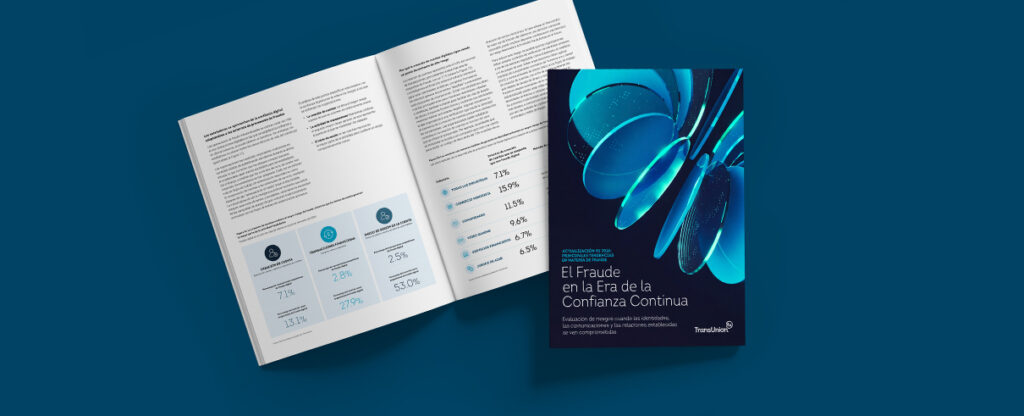
Most of the data cited in this release comes from the H2 2026 update of TransUnion’s Fraud Trends Report: Fraud in the Age of Continuous Trust. Some additional data comes from consumer and business leader surveys commissioned by TransUnion, as well as from insights drawn from its global proprietary intelligence network.
About TransUnion (NYSE: TRU)
TransUnion is a global information and insights company with more than 13,000 employees operating in over 30 countries, including the Dominican Republic. We make trust possible by ensuring each person is reliably represented in the marketplace. We do this with an actionable view of consumers, stewarded with care.
Through our acquisitions and technology investments we have developed innovative solutions in areas such as marketing, fraud prevention, risk management and advanced data analytics. As a result, consumers and businesses can transact with confidence and achieve great things. We call this Information for Good®, and it leads to economic opportunity, great experiences and personal empowerment for millions of people around the world.
For more information, visit transunion.do
More stories
- Pioneering Cleveland Clinic trial shows gene-silencing therapy for high cholesterol is safe and effective
- Specialist warns about the silent development of cardiovascular disease
- New research improves the prediction of type 2 diabetes risk
- Médico Express specialist explains the benefits of breast MRI