Cleveland Clinic study shows deep brain stimulation is promising for stroke patients
5 minutes read
- The first results of the phase one human trial are published in Nature Medicine.
15 August 2023, CLEVELAND: A first-in-human trial of deep brain stimulation (DBS) for patients in rehabilitation after a stroke, conducted by Cleveland Clinic researchers, has shown that DBS targeting the dentate nucleus – which regulates fine control of voluntary movements, cognition, language and the brain’s sensory functions – is safe and feasible.
The EDEN trial (Electrical Stimulation of the Dentate Nucleus for Upper Extremity Hemiparesis Due to Ischemic Stroke) also shows that most participants (9 of 12) demonstrated improvements in both motor impairment and function. Importantly, the study showed that participants with at least minimal preservation of distal motor function at enrolment showed gains that almost tripled their baseline scores.
The results have been published in Nature Medicine.
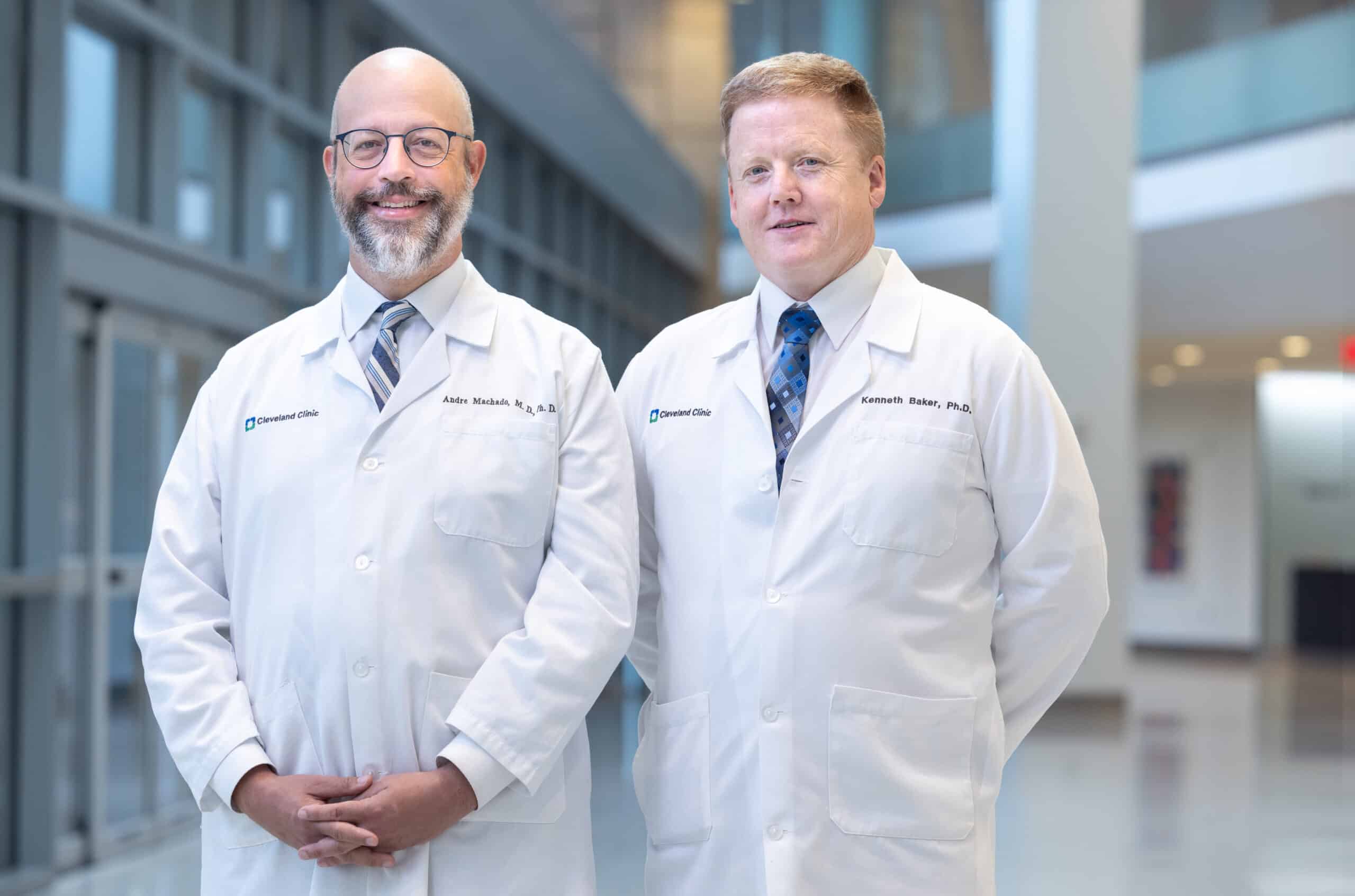
These findings build on more than a decade of preclinical work led by principal investigators Andre Machado, M.D., Ph.D., and Kenneth Baker, Ph.D., of Cleveland Clinic.
“These results are reassuring for patients, as the study participants had been disabled for more than a year and, in some cases, three years after their stroke. This gives us a potential opportunity to introduce much-needed improvements in rehabilitation in the chronic phases of stroke recovery,” said Dr. Machado, chair of Cleveland Clinic’s Neurological Institute. “The implications for the quality of life of study participants who responded to the therapy have been significant.”
Dr. Machado patented the method of using DBS in stroke recovery. Boston Scientific holds the licence to those patents and provided the Vercise DBS systems used in the trial. In 2010, Cleveland Clinic Innovations created Enspire DBS Therapy, Inc, a Cleveland Clinic portfolio company that commercialises technology developed at Cleveland Clinic, to commercialise the method, and it co-funded the study. Dr. Machado has stock options and equity in Enspire and is its chief medical officer.
“We saw patients in the study regain levels of function and independence they didn’t have before enrolling in the research,” said Dr. Machado. “It was a smaller study, and we look forward to expanding it, as we have begun the next phase.”
The now-completed EDEN trial (Electrical Stimulation of the Dentate Nucleus for Upper Extremity Hemiparesis Due to Ischemic Stroke) enrolled 12 people with chronic moderate to severe upper-limb hemiparesis resulting from a unilateral middle cerebral artery stroke 12 to 36 months earlier. There were no major complications during the study. Nine of the 12 participants improved to a degree considered meaningful in stroke rehabilitation.
Each participant underwent a DBS procedure, in which electrodes were surgically implanted in a part of the brain called the cerebellum. Once connected to a pacemaker-like device, the electrodes were used to deliver small electrical pulses to help people regain control of their movements. After discharge and recovery from surgery, participants completed months of physical therapy, first with the DBS device switched off for several weeks and then switched on for four to eight months. The most significant improvements were seen after the device was switched on.
“The safety and feasibility data from this initial study, combined with the potential symptomatic improvements, certainly support the need for larger additional trials to test whether cerebellar DBS is truly a potential treatment for motor impairment after stroke,” said Brooks Gross, Ph.D., programme director at the National Institute of Neurological Disorders and Stroke.
Stroke is the leading cause of long-term disability. Approximately 800,000 people have a stroke every year in the United States alone. Although most patients survive the acute phase, persistent neurological problems are likely to compromise quality of life and productivity, as approximately 50% of survivors continue to have severe disabilities requiring assistance with daily activities.
“There are currently no effective methods to improve the physical rehabilitation outcomes of the hundreds of thousands of stroke survivors,” said Dr. Baker of Cleveland Clinic’s Lerner Research Institute. “The study results showed that deep brain stimulation combined with physical therapy improved movement in patients who had had a stroke more than a year earlier and whose motor improvements had largely plateaued. This tells us the study deserves further investigation in larger patient samples.”
The research reported in this press release was funded by the NIH Brain Research Through Advancing Innovative Neurotechnologies® Initiative, or The BRAIN Initiative®, under award number UH3NS100543. The study was also supported by Enspire DBS Therapy, Inc.

About Cleveland Clinic
Cleveland Clinic is a nonprofit multispecialty academic medical centre that integrates clinical and hospital care with research and education. Located in Cleveland, Ohio, it was founded in 1921 by four renowned physicians with a vision of providing outstanding patient care based on the principles of cooperation, compassion and innovation. Cleveland Clinic has pioneered many medical breakthroughs, including coronary artery bypass surgery and the first face transplant in the United States.
U.S. News & World Report consistently names Cleveland Clinic as one of the nation’s best hospitals in its annual “America’s Best Hospitals” survey. Among Cleveland Clinic’s 72,500 employees worldwide are more than 5,050 salaried physicians and researchers, and 17,800 registered nurses and advanced practice providers, representing 140 medical specialties and subspecialties. Cleveland Clinic is a 6,500-bed health system that includes a 173-acre main campus near downtown Cleveland, 21 hospitals, more than 220 outpatient facilities, and locations in northeast Ohio; southeast Florida; Las Vegas, Nevada; Toronto, Canada; Abu Dhabi, UAE; and London, England.
In 2021, there were 10.2 million outpatient visits, 304,000 hospital admissions and observations, and 259,000 surgeries across Cleveland Clinic’s health system. Patients came for treatment from every state and 185 countries.
Visit us at clevelandclinic.org. Follow us at twitter.com/ClevelandClinic. News and resources available at newsroom.clevelandclinic.org.
Find out more about AF Comunicación Estratégica and its clients
More stories
- Public Health, the Dental Association and ADTS drive medical and dental tourism
- Alejandro Cambiaso presents the Dominican Republic’s health tourism success story in Guatemala and calls for a stronger regional vision for Latin America
- ADTS and AF Comunicación announce the 8th International Health and Wellness Tourism Congress 2027
- Internal Communication as a strategic tool for organisational management