
Cybersecurity must be a priority: no one is free from risk
4 minutes read
- 47% of IT decision-makers accelerated digital transformation after the pandemic, forcing companies to prioritise cybersecurity in the face of new digital infrastructure risks.
June 2022.- According to the results of Equinix’s 2020-21 Global Tech Trends Survey (GTTS), after the COVID-19 pandemic 47% of Information Technology (IT) decision-makers said their organisations had accelerated their digital transformation initiatives, while 60% said the pandemic forced them to review and revise their IT strategy.
Companies have moved away from singular on-premises networks, as shown by increasingly disaggregated digital infrastructures using multicloud and edge deployments. This evolution has only just begun, and digital infrastructures are responding and adapting to the introduction of new technologies and cybersecurity protocols. This growing digitalisation will open companies up to more complex cybersecurity threats, which can only be mitigated through new and innovative security strategies.
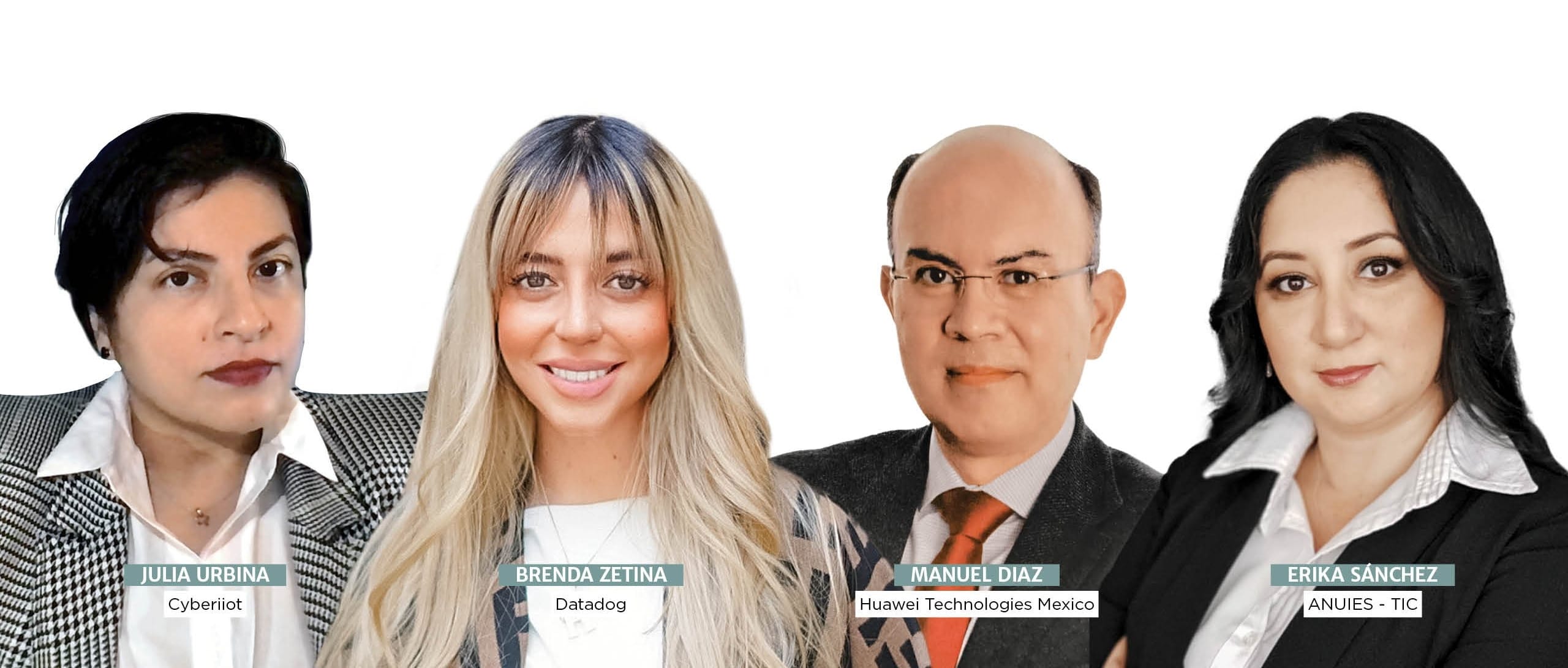
There are five main risks that can arise as digital infrastructure evolves. “The first arises when companies try to digitalise what cannot or should not be digitalised. The second arises from an accelerated process that skips the tools and processes for this digitalisation. The third is inadequate integration, the fourth is acquiring products that don’t necessarily benefit the environment, and the last is non-compliance with privacy and security regulations,” says Julia Urbina, Chief Information Security Officer (CISO) at Cyberiiot.
The right processes for evolving digital infrastructure allow organisations to adapt to technology trends dynamically, so that when the need arises they can quickly assemble and reassemble the right building blocks and resources. In many ways, the ability to interconnect with partner and customer ecosystems is key to helping organisations get real value from their digital infrastructures.
“Companies have now realised the value of cybersecurity and how they use it to evolve their organisations and achieve business continuity better than they could without the technology. Now the IT team reports to the Security team and not the other way round. This is already bringing benefits to companies and end users,” said Brenda Zetina, Territory Director at Datadog.
This transition needs integrated planning to be organised. All facets of the business, such as customer service, HR, IT, sales and management, must work together to review their current systems and the data generated as part of their daily operations, explained Manuel Díaz, Director of Cybersecurity and Privacy Protection, Huawei Technologies Mexico. With that information, companies must define a path to connect their data, break down information silos and share their knowledge to become smarter. Integration planning can improve the experiences of customers, employees, business partners and everyone else involved in the company.
Through integration, companies can define corporate priorities, develop roles and responsibilities across all areas of the business, have clear and up-to-date corporate policies and make sure they comply with national regulations to avoid penalties for legal breaches.
In this integrated ecosystem, cybersecurity must be a priority, especially because no one is free from risk in these rapidly evolving environments, said Zetina. Companies therefore need a single source of information about what is happening in order to reduce risks for end customers and the company itself. Communication and training are also essential. “Training and raising employee awareness in security areas is also fundamental, as they too can be targeted by threats,” said Díaz.
Other effective ways to reduce risks are to incorporate multi-factor authentication and ensure clear connection processes from the network to users and physical security mechanisms, because “not everyone works from the office and many companies have third parties with whom information is shared,” said Díaz.
Cloud cybersecurity is also key, said Urbina. Over the last year, companies have struggled to secure their cloud infrastructure, as its inherently disaggregated design has introduced multiple entry points for cybercriminals to exploit, MBN reported.
These security gaps, which typically form during initial onboarding and, most commonly, when switching between cloud service providers, are the main cause of cloud data breaches. Companies lack the security knowledge and tools to protect their public cloud infrastructure, even as they consider adding other cloud services. “That’s why authentication is also fundamental at this stage, not only for our direct employees but also for our third parties and cloud providers,” said Urbina.
However, “there are systems that can help companies achieve a secure digital space and infrastructure at every level,” noted Erika Sánchez, coordinator of the ANUIES Mexico Network of Women in ICT. These measures include making cybersecurity part of companies’ core culture, building collaborative relationships with suppliers, customers, regulators and academia, and investing in R&D for more tools that can support the business.
“Companies can base their risk assessment on the NIST Cybersecurity Framework, which has five core functions — identify, protect, detect, respond and recover — and can be used by everyone from SMEs to governments to analyse their tangible and intangible assets under a single profile,” said Urbina.
Find out more about AF comunicación estrategica and its clients.
More stories
- Public Health, the Dental Association and ADTS drive medical and dental tourism
- Alejandro Cambiaso presents the Dominican Republic’s health tourism success story in Guatemala and calls for a stronger regional vision for Latin America
- ADTS and AF Comunicación announce the 8th International Health and Wellness Tourism Congress 2027
- Internal Communication as a strategic tool for organisational management