
Education and business leaders in Latin America and the Caribbean call for joint efforts to grow the digital talent pool
4 minutes read
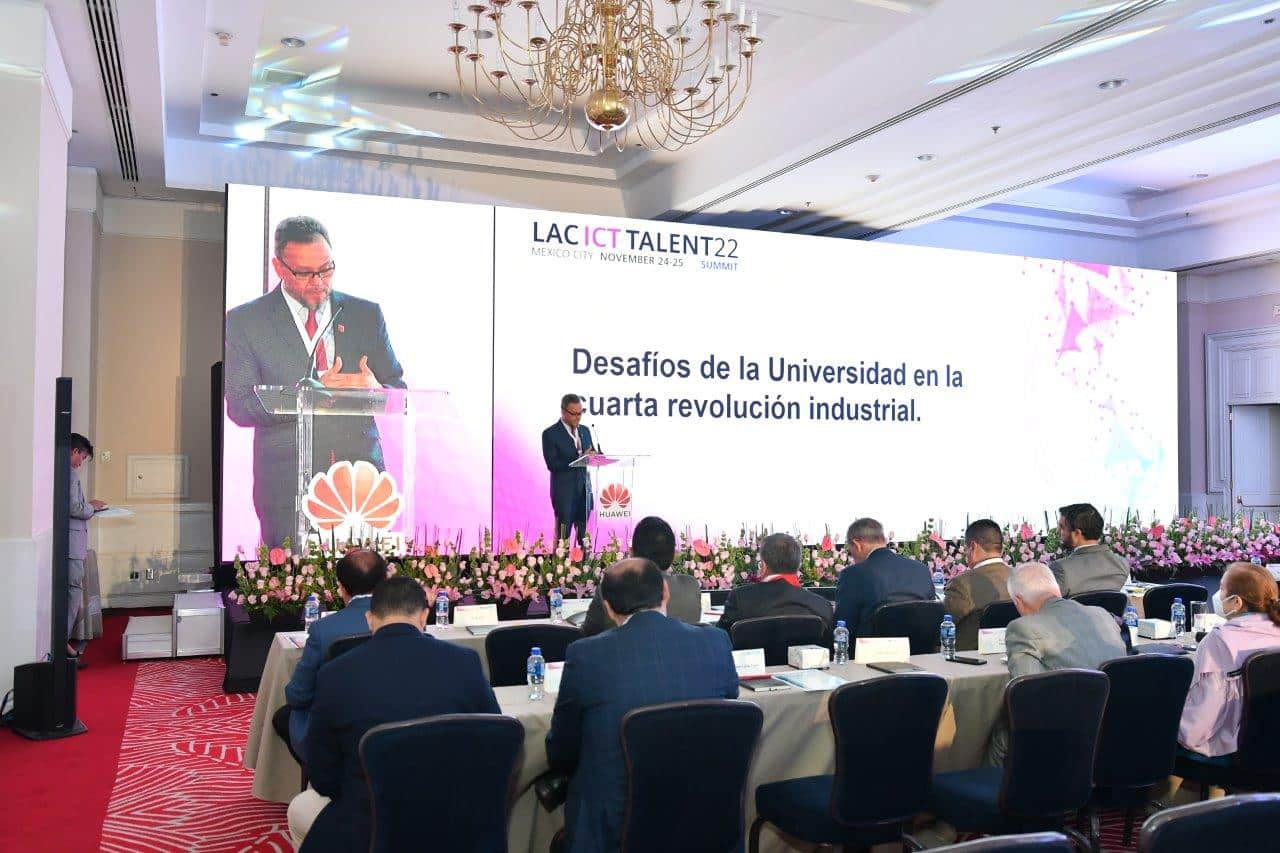
- At the first LAC ICT Talent Summit, co-organised by Huawei, UNESCO and EFE, leaders called for joint efforts by policymakers, the private sector and academia to invest more in building digital skills and growing the digital talent pool.
(Mexico City, November) Leaders from the digital sector, educational institutions and policymakers called for joint efforts to grow the digital talent pool in Latin America and the Caribbean in the wake of the COVID-19 pandemic.
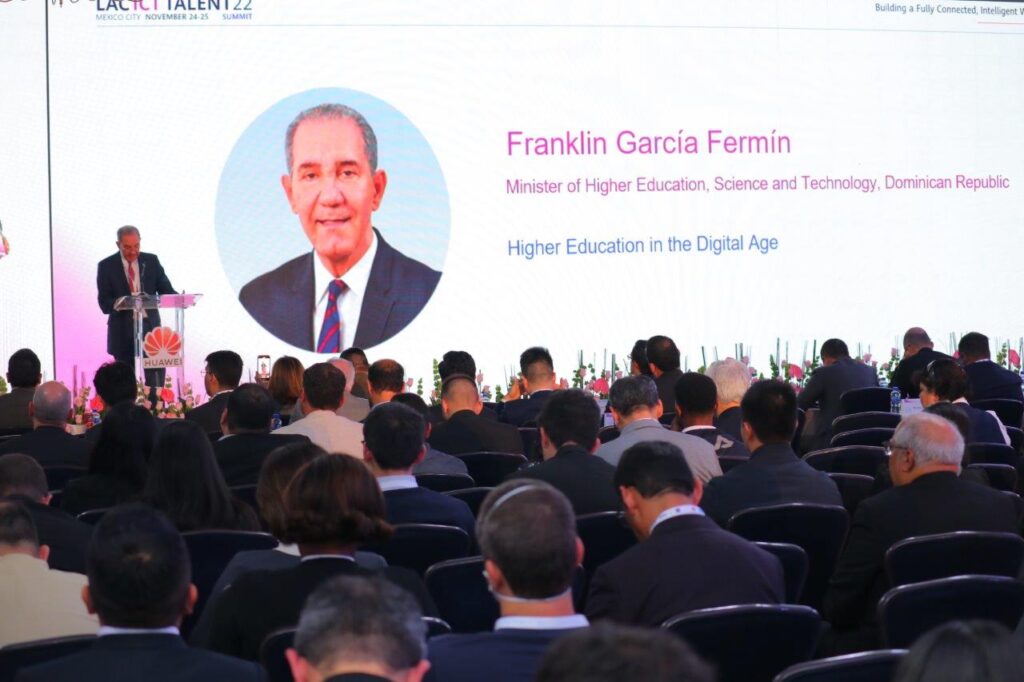
Lack of connectivity and a shortage of people well prepared to work in the Information and Communication Technology (ICT) sector are two of the region’s challenges. These are among the conclusions of the first LAC Talent Summit, co-organised by global digital infrastructure leader Huawei, UNESCO and the news agency EFE with the support of the National Autonomous University of Mexico (UNAM).
“Our work in Latin America and the Caribbean, for Latin America and the Caribbean, is to support the rollout of connectivity networks by providing cutting-edge, green technologies, and also to put our knowledge and skills at the service of communities to train digital talent and close gaps,” said Michael Xue, Vice President of Huawei Latin America and the Caribbean.
During the discussions, guests addressed topics such as accelerating digital transformation, the job market for ICT professionals and the challenges countries face in meeting demand for skilled staff and digital skills.
Research by the international consultancy IDC showed that Latin America and the Caribbean are expected to need 2.5 million additional ICT-related professionals by 2026, compared with the current pool of 6.3 million.
Claudia Uribe, director of UNESCO’s Regional Bureau for Education in Latin America and the Caribbean (OREALC), spoke about the challenges of closing talent gaps.
“The COVID-19 pandemic highlighted the urgent need to close the digital divide and make digital content, technology and connectivity available to all,” she said.
Arun Sundararajan, Harold Price Professor of Entrepreneurship at New York University’s Leonard N. Stern School of Business, said digital technologies will transform work in the coming decades, causing radical changes in the demand for talent.
“Two education policy imperatives will be key,” he said. “We need to create ‘scaffolding’ for talent to reach the global market, creating on-ramps that allow talent at different skill levels to access opportunity platforms.”
“We also need education systems that focus on the occupational transition of workers who will be displaced by automation. The global approach in the 20th century focused on university at the start of one’s career; the need in the 21st century is centred on mid-career transition,” he added.
Participants in the conference, which brought together around a hundred experts and 150 students from Latin America and the Caribbean, also discussed ways to strengthen the action of each part of the digital ecosystem by pooling individual efforts towards a common goal.
Huawei has launched a series of talent initiatives in Latin America and the Caribbean, helping to train 50,000 talents in recent years. Since 2014 it has run its flagship Seeds for the Future programme, which offers some 1,800 scholarships for students to receive intensive training and visit the company’s headquarters in Shenzhen, southern China. It has also partnered with around 400 universities in the region that offer training through the Huawei ICT Academy programme. Many students have also taken part in the Huawei ICT Global Competition and the Developer Competition.
“As a leading technology company, we are proud of our contribution to narrowing digital divides in different countries. The shortage of people well prepared in ICT is an urgent matter we must tackle together with universities and governments, working harder and in a more coordinated way,” said Zhou Danjin, President of Huawei Latin America.
The LAC ICT Talent Summit, co-organised by Huawei, OREALC and EFE, aims to be a multilateral platform to drive joint efforts in Latin America and the Caribbean to grow the regional digital talent pool in response to the demand created by increasingly rapid digital transformation.

About Huawei
Founded in 1987, Huawei is a leading global provider of information and communications technology (ICT) infrastructure and smart devices. We have approximately 197,000 employees and operate in over 170 countries and regions, serving more than three billion people around the world.
Our vision and mission is to bring digital to every person, home and organisation for a fully connected, intelligent world. To this end, we will drive ubiquitous connectivity and promote equal access to networks; bring cloud and artificial intelligence to all four corners of the earth to provide superior computing power where you need it, when you need it; build digital platforms to help all industries and organisations become more agile, efficient and dynamic; and redefine user experience with AI, making it more personalised for people in all aspects of their life, whether they’re at home, in the office or on the go.
Find out more about AF Comunicación Estratégica and its clients
More stories
- Public Health, the Dental Association and ADTS drive medical and dental tourism
- Alejandro Cambiaso presents the Dominican Republic’s health tourism success story in Guatemala and calls for a stronger regional vision for Latin America
- ADTS and AF Comunicación announce the 8th International Health and Wellness Tourism Congress 2027
- Internal Communication as a strategic tool for organisational management