
Latin America and the Caribbean face a shortfall of 2.5 million digital professionals over the next 5 years, study finds
6 minutes read
- 12.6% growth in enterprise IT spending in Latin America is driving demand for professionals in the sector, with IT security and IT operations the hardest roles to fill, according to the study carried out in Brazil, Colombia, Mexico, Argentina and Peru.
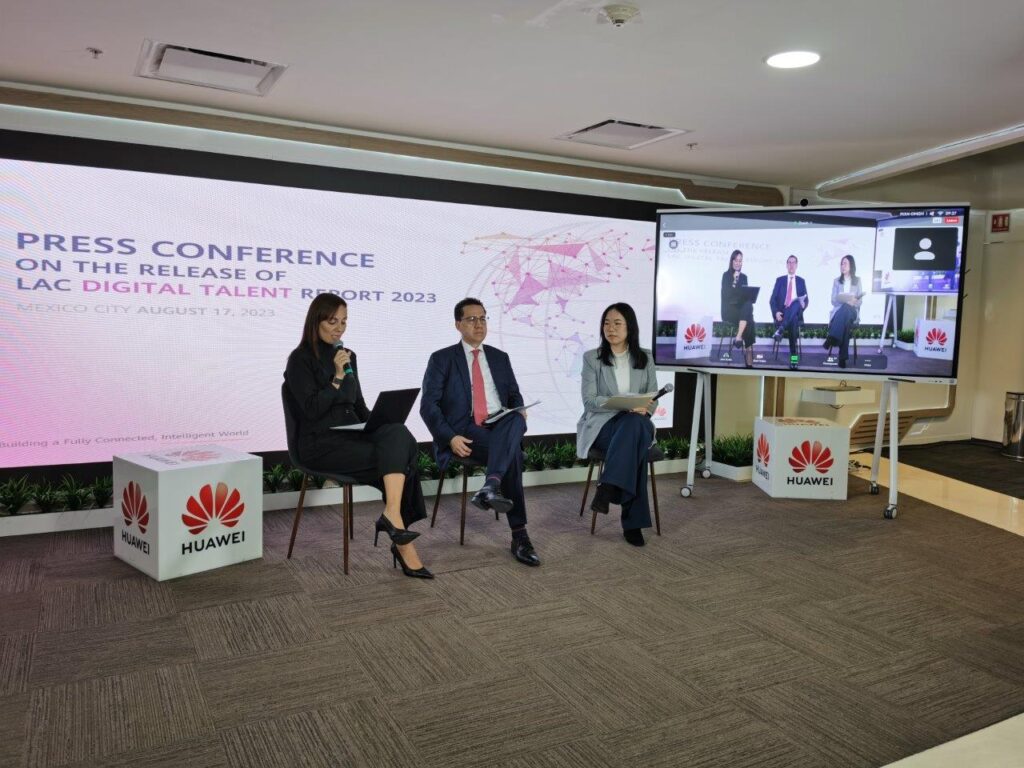
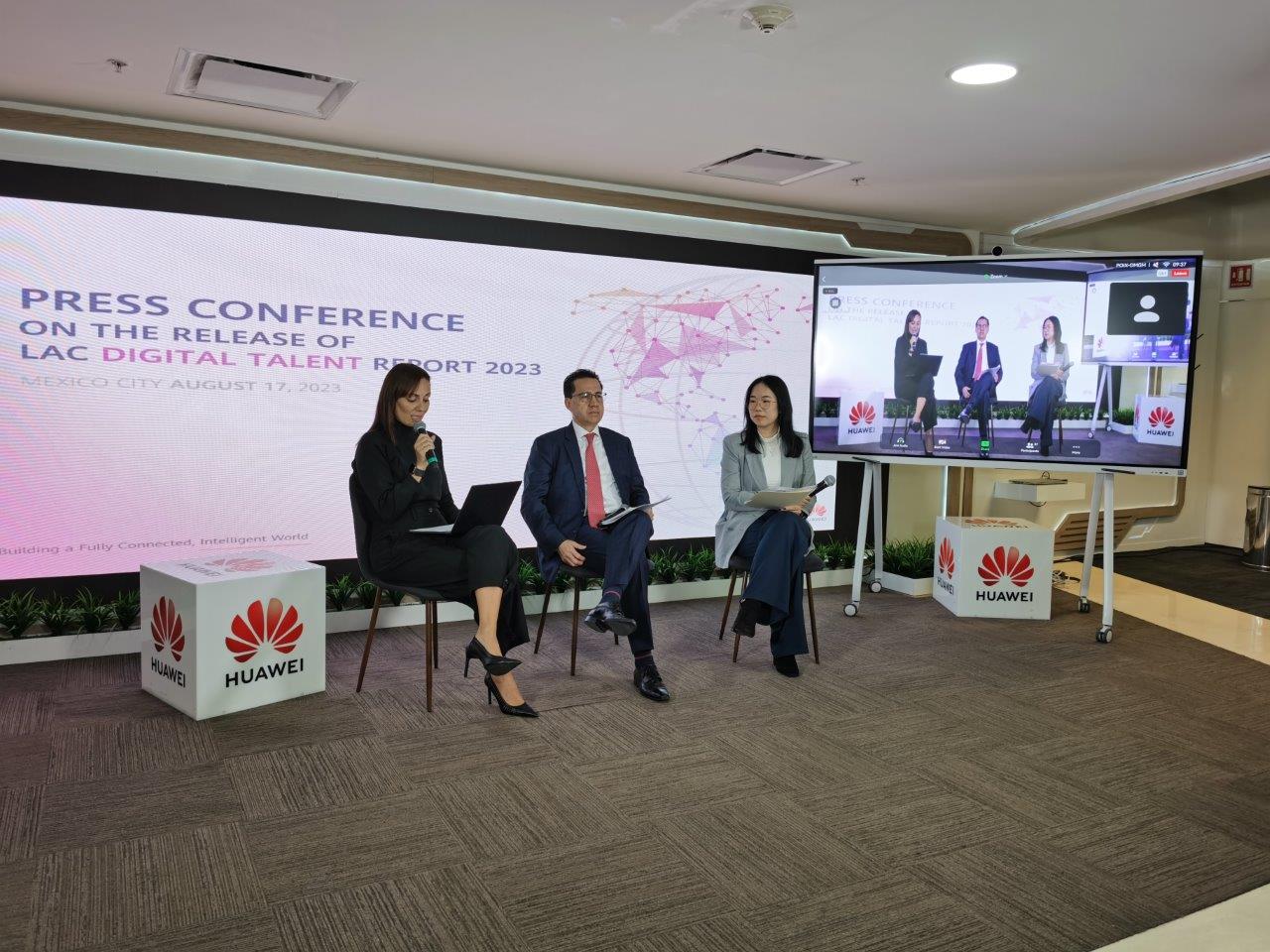
[MEXICO CITY, 17 August 2023] – Latin America and the Caribbean are estimated to need another 2.5 million digital professionals over the next five years, according to a recent study on digital talent commissioned by Huawei and carried out by the consultancy IDC.
The report, released at an event on Thursday, notes that spending on information technology (IT) in the region is slightly above the global average growth and much higher than GDP growth in the region, and is expected to trend above around 10.2% by 2026.
Enterprise IT spending in the region is expected to grow by 12.6% in 2023, and companies in Latin America are expected to continue struggling with a lack of skilled labour in sectors related to information and communications technology (ICT), the report says.
Technology roles have remained comparatively stable despite rising unemployment and the economic downturn during the COVID-19 pandemic.
“Demand for digital talent has been growing steadily in recent years, creating a gap between supply and demand,” said Cesar Funes, vice president of public affairs at Huawei Latin America and the Caribbean.
“On top of that, there is often a serious problem of mismatch between supply and demand in terms of skills,” he added, citing the rapidly evolving landscape of digital technologies.
Experts and young people working in the industry or who took part in digital talent programmes discussed the state of regional digital talent and its challenges in a panel held alongside the launch of the report.
The study highlighted three channels to help companies grow the pool of digital talent: ongoing training, professional development and the use of business partners’ latest technologies.
In particular, the IDC report suggests that companies make greater efforts to drive cloud automation based on artificial intelligence and machine learning, which improves the resilience of digital businesses and enhances the customer experience.
It also suggests freeing up essential staff for more creative work while placing more emphasis on IT automation, thereby increasing workforce productivity.
During the event, Carlos Nazareth Marins, director of Inatel, Brazil, said the emergence of large language models such as ChatGPT and Pangu – a large AI model developed by Huawei – is expected to have an impact on digital education. “It’s a reality that AI will be part of our lives. We need to change the way we learn. Artificial intelligence is a good tool for the future. That’s the big challenge for us,” he said.
The experts and young professionals at the event said these developments call for joint efforts among stakeholders such as policymakers, the private sector, and schools and universities.
“What we do know is that ChatGPT will change the way our future generations acquire knowledge and skills, and it will definitely change the way education is delivered,”said Shau Wa Yu Tan, public relations manager at Huawei Mexico, who is involved in digital talent programmes.
Huawei, a global ICT leader, is both the employer and the cultivator of one of the world’s largest pools of top ICT talent. The company has more than 200,000 employees worldwide, more than half of them in research and development.
In addition, Huawei has launched several talent initiatives worldwide. In Latin America and the Caribbean, this year the company is celebrating the tenth anniversary of the arrival in the region of its flagship training programme, Seeds for the Future.
In fact, the Seeds for the Future programme was first held in the region in Colombia (2014) and then expanded to cover some 20 countries. Since then, Huawei has offered scholarships to some 2,000 students in total in Latin America and the Caribbean to visit Huawei’s headquarters in Shenzhen, China. During the pandemic, the courses moved online to keep them going.
“When we look back, we can say that we have kept it going, even during the pandemic years. We have also constantly updated the programme, and it is now mainly Seeds for the Future 2.0 in many of the countries in the region where we have launched it,” said Funes.
The winning students usually receive a scholarship that funds a trip to China, where they spend two weeks on an immersive educational programme at Huawei, receive guidance from engineers working at the company and are exposed to the latest trends in digital technology. They also visit cities and companies.
“I think initiatives like this are extremely valuable, not only for showcasing young talent but also for showing us what we can do in the long term,” said Leticia de Oliveira Silva, a delivery project management specialist at Huawei Brazil, who took part in the Seeds for the Future programme.
Leticia joined the company about five years ago and is now also involved in women-in-tech initiatives. She was the only one in her family to get a job at one of the best companies in the technology industry.
“The Seeds for the Future programme changed my life: no woman in my family worked in technology, so for me it was an extremely distant reality,” says the 26-year-old project manager, daughter of a business administrator. Her story was featured in a documentary earlier this year. “The mirror is what we need,” a proud Leticia says in the documentary. “With the programme we had the opportunity to travel to China. There we learned about new technologies; people were talking about 5G, but Seeds for the Future puts you in that world, and travelling and seeing it live was wonderful for my career.”
Huawei also runs the ICT Academy, with more than 400 partner universities that receive help to train and certify students in digital technologies and skills, and the global ICT Competition, with student teams often reaching the global final.
Huawei also works on initiatives aimed at closing geographical and gender gaps. Women In Tech promotes greater inclusion of women in the ICT field, where they currently make up a low 16-30% of the workforce in 45% of companies.

About Huawei
Founded in 1987, Huawei is a leading global provider of information and communications technology (ICT) infrastructure and smart devices. We have approximately 197,000 employees and operate in over 170 countries and regions, serving more than three billion people around the world.
Our vision and mission is to bring digital to every person, home and organisation for a fully connected, intelligent world. To this end, we will drive ubiquitous connectivity and promote equal access to networks; bring cloud and artificial intelligence to all four corners of the earth to provide superior computing power where and when it is needed; build digital platforms to help all industries and organisations become more agile, efficient and dynamic; and redefine user experience with AI, making it more personalised for people in all aspects of their life, whether they are at home, in the office or on the go.
Find out more about AF Comunicación Estratégica and its clients
More stories
- Public Health, the Dental Association and ADTS drive medical and dental tourism
- Alejandro Cambiaso presents the Dominican Republic’s health tourism success story in Guatemala and calls for a stronger regional vision for Latin America
- ADTS and AF Comunicación announce the 8th International Health and Wellness Tourism Congress 2027
- Internal Communication as a strategic tool for organisational management