
Not treating prostate cancer for fear of erectile dysfunction can have greater consequences for life expectancy
3 minutes read
- It is the second most common cancer in men after skin cancer.
- Today there are treatments that allow patients to remain sexually active.
October 2022: – Most prostate cancers present at an asymptomatic stage, so screening is recommended between the ages of 55 and 70, and early screening from 40 is needed for patients with risk factors.
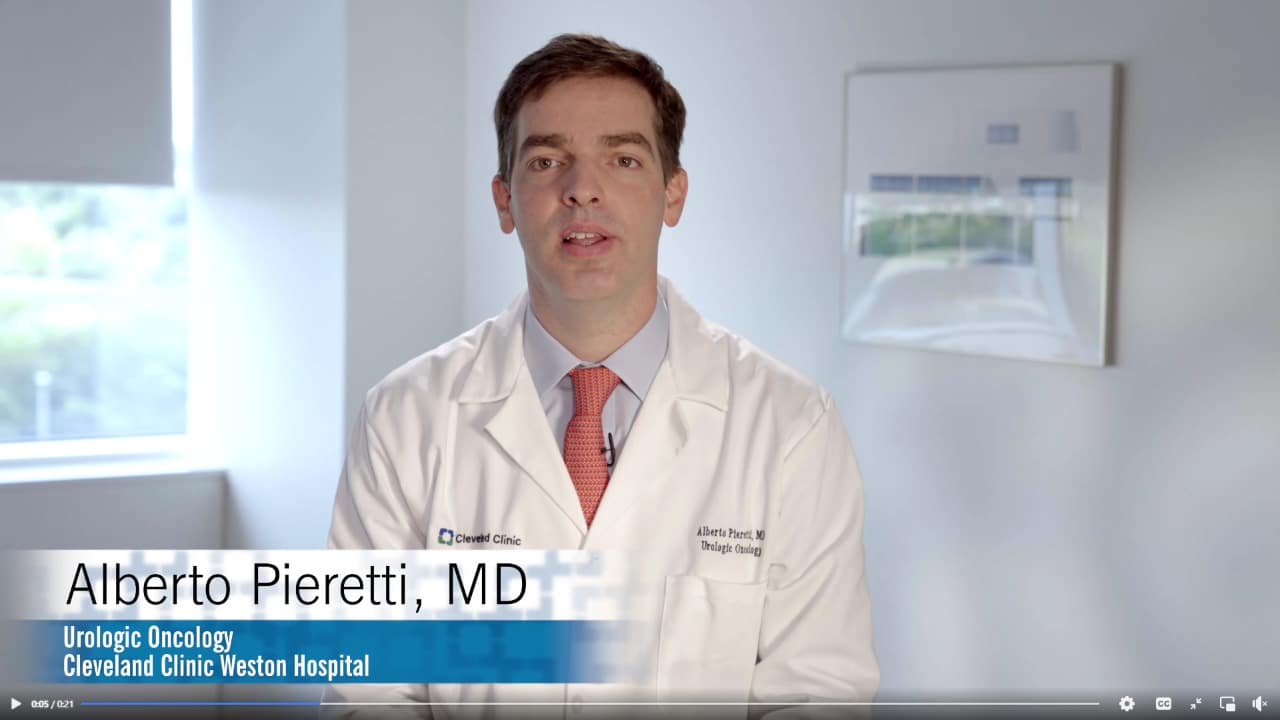
Dr. Alberto Pieretti, a urologist at Cleveland Clinic Weston, explains that not treating cancer for fear of erectile dysfunction can lead to local and systemic symptoms with greater consequences for both quality of life and life expectancy than possible erectile dysfunction.
He says that in patients with prostate cancer, treatment can cause temporary or permanent erectile dysfunction. “Many factors can affect this, including the patient’s baseline function, how locally advanced the cancer is and the surgeon’s experience in preserving the nerves.”
When we talk about erectile dysfunction, we mean spontaneous erections. “Today we have treatments that allow patients to remain sexually active,” stresses the doctor.
Prostate cancer as such cannot be prevented, but early testing is associated with better life expectancy, with both functional and oncological results.
He added that life expectancy is excellent in patients with localised cancer; at an advanced stage it depends on many factors, but today there are many treatments that can significantly improve life expectancy.
Advances in treatment
The advances in prostate cancer treatment are countless. As well as the prostate-specific antigen (PSA) test, which makes early detection easier, there is prostate MRI, which has revolutionised treatment in many ways, reducing the number of biopsies and allowing patients to be studied better through targeted biopsies; its use before surgery is linked to fewer positive margins at the time of surgery.
Genetic testing in high-risk patients makes it possible to identify potential treatment options and relatives who may be affected by the same condition, allowing early diagnosis.
There is also PSMA PET, a nuclear medicine scan that can locate prostate cancer at earlier stages and with greater precision. It is generally used in patients whose PSA rises again after treatment of the primary tumour, and has recently been used in patients with high-risk prostate cancer to improve initial staging.
It also helps identify which patients can benefit from different treatments, providing more accurate staging than conventional imaging.
“In advanced or systemic cases, over the past 10 years we have seen an increase in treatments and combinations of procedures, all associated with better survival for patients,” says Pieretti.

About Cleveland Clinic
Cleveland Clinic is a nonprofit multispecialty academic medical centre that integrates clinical and hospital care with research and education. Located in Cleveland, Ohio, it was founded in 1921 by four renowned physicians with a vision of providing outstanding patient care based on the principles of cooperation, compassion and innovation.
Cleveland Clinic has pioneered many medical breakthroughs, including coronary artery bypass surgery and the first face transplant in the United States. U.S. News & World Report consistently names Cleveland Clinic as one of the nation’s best hospitals in its annual “America’s Best Hospitals” survey. Among Cleveland Clinic’s 72,500 employees worldwide are more than 5,050 salaried physicians and researchers, and 17,800 registered nurses and advanced practice providers, representing 140 medical specialties and subspecialties.
Cleveland Clinic is a 6,500-bed health system that includes a 173-acre main campus near downtown Cleveland, 22 hospitals and more than 220 outpatient facilities, including locations in northeast Ohio; southeast Florida; Las Vegas, Nevada; Toronto, Canada; Abu Dhabi, UAE; and London, England. In 2021, there were 10.2 million outpatient visits, 304,000 hospital admissions and observations, and 259,000 surgical cases throughout Cleveland Clinic’s health system. Patients came for treatment from every state and 185 countries.
Visit us at clevelandclinic.org. Follow us at twitter.com/ClevelandClinic. News and resources available at newsroom.clevelandclinic.org.
Find out more about AF Comunicación Estratégica and its clients
More stories
- Public Health, the Dental Association and ADTS drive medical and dental tourism
- Alejandro Cambiaso presents the Dominican Republic’s health tourism success story in Guatemala and calls for a stronger regional vision for Latin America
- ADTS and AF Comunicación announce the 8th International Health and Wellness Tourism Congress 2027
- Internal Communication as a strategic tool for organisational management