
Procedures to tackle obesity and overweight are not a magic formula
3 minutes read
- Since 1998, 11 October has marked Latin American Day against Obesity, reflecting the region’s scientific community’s concern about “the epidemic of the 21st century”.
- One of the most important public health problems of the past 50 years is the weight gain that leads to overweight and obesity.
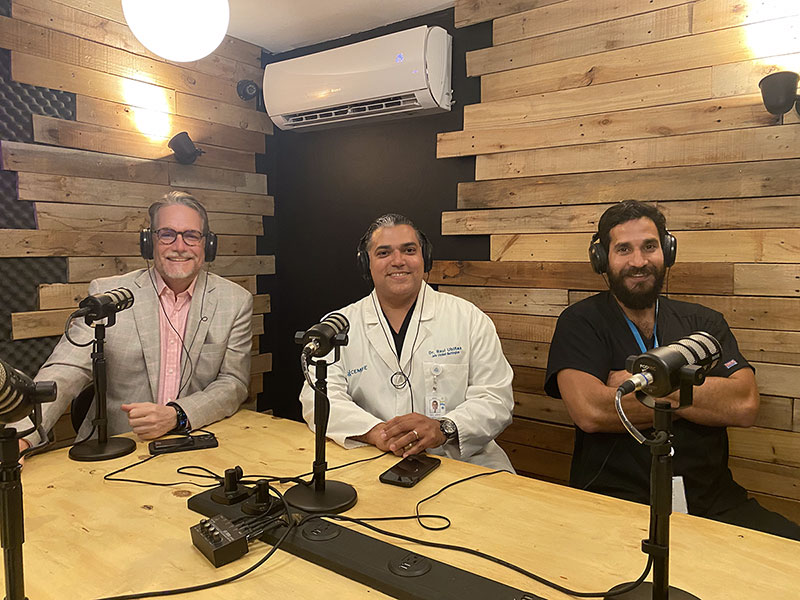
Santo Domingo, October 2022.- To mark Latin American Day against Obesity on 11 October, doctors Luis Betances, general, bariatric and metabolic surgeon; Raúl Ubiñas, general, advanced laparoscopic, bariatric and metabolic surgeon; and Philippe García, general and laparoscopic surgeon, of the Diabetes, Obesity and Specialties Medical Centre (CEMDOE), dispel the myth that surgical procedures are a definitive solution for patients with obesity and overweight.
“To help patients lose weight there are a variety of options, such as gastric balloons, gastric sleeve, gastric bypass and combined procedures such as sleeve and bypass,” explained Dr. Ubiñas on the Es Cuestión de Salud podcast from the INTEGRA Ecosystem.
Each of these procedures has its own function and the choice depends on what needs to be achieved: someone who is overweight and doesn’t need their stomach cut can use the balloon, while for type two or three obesity another method is recommended, the doctors stressed.
“The procedures are an aid; there is no study proving that anyone who had one of these procedures maintained their weight for more than five years,” said Betances.
It is important for patients to receive a comprehensive approach to overweight or obesity, supervised by one or more health professionals, from the nutritionist and surgeon to psychology.
Pre-surgery requirements
The specialists explained that a patient with obesity who wants a procedure must first undergo a series of assessments, tests and studies to determine whether they qualify before proceeding.
“One guideline says patients must be over 18, but we have operated on younger patients, as long as there is parental consent and psychological support. It also says up to 65, but sometimes older people have the right genetics and the procedure can be done,” says Ubiñas.
After surgery
On the post-operative process, Dr. Philippe García notes that it can vary depending on the patient’s condition, but one important thing is to exercise – it doesn’t matter what kind, whatever best suits their tastes.
García told the story of a patient who had had surgery and refused to exercise because she didn’t like anything; he tried to guide her until she discovered boxing, which she has now been doing for several years.
How many pounds are lost depends on how overweight the person is. In this regard, Dr. Betances recalls operating on a patient who was 600 pounds overweight and lost 80 in a month, while another who was only 100 pounds above ideal weight lost 15. It isn’t always about pounds; the inches lost matter too.
Diet
“When it comes to watching your diet, it is important to have a nutritionist help you understand what you can eat and how much; for those who have had their stomach reduced, overeating could cause vomiting and other conditions,” they say.

About CEMDOE
An outpatient medical centre specialising in chronic diseases that offers a comprehensive care model focused on the safety, quality and experience of patients and their families, supported by international processes, standards and policies that ensure the success of its purpose.
CEMDOE is part of INTEGRA, the Dominican Republic’s first health ecosystem, which aims to improve the population’s health in a sustainable way.
Find out more about AF Comunicación Estratégica and its clients
More stories
- Public Health, the Dental Association and ADTS drive medical and dental tourism
- Alejandro Cambiaso presents the Dominican Republic’s health tourism success story in Guatemala and calls for a stronger regional vision for Latin America
- ADTS and AF Comunicación announce the 8th International Health and Wellness Tourism Congress 2027
- Internal Communication as a strategic tool for organisational management