
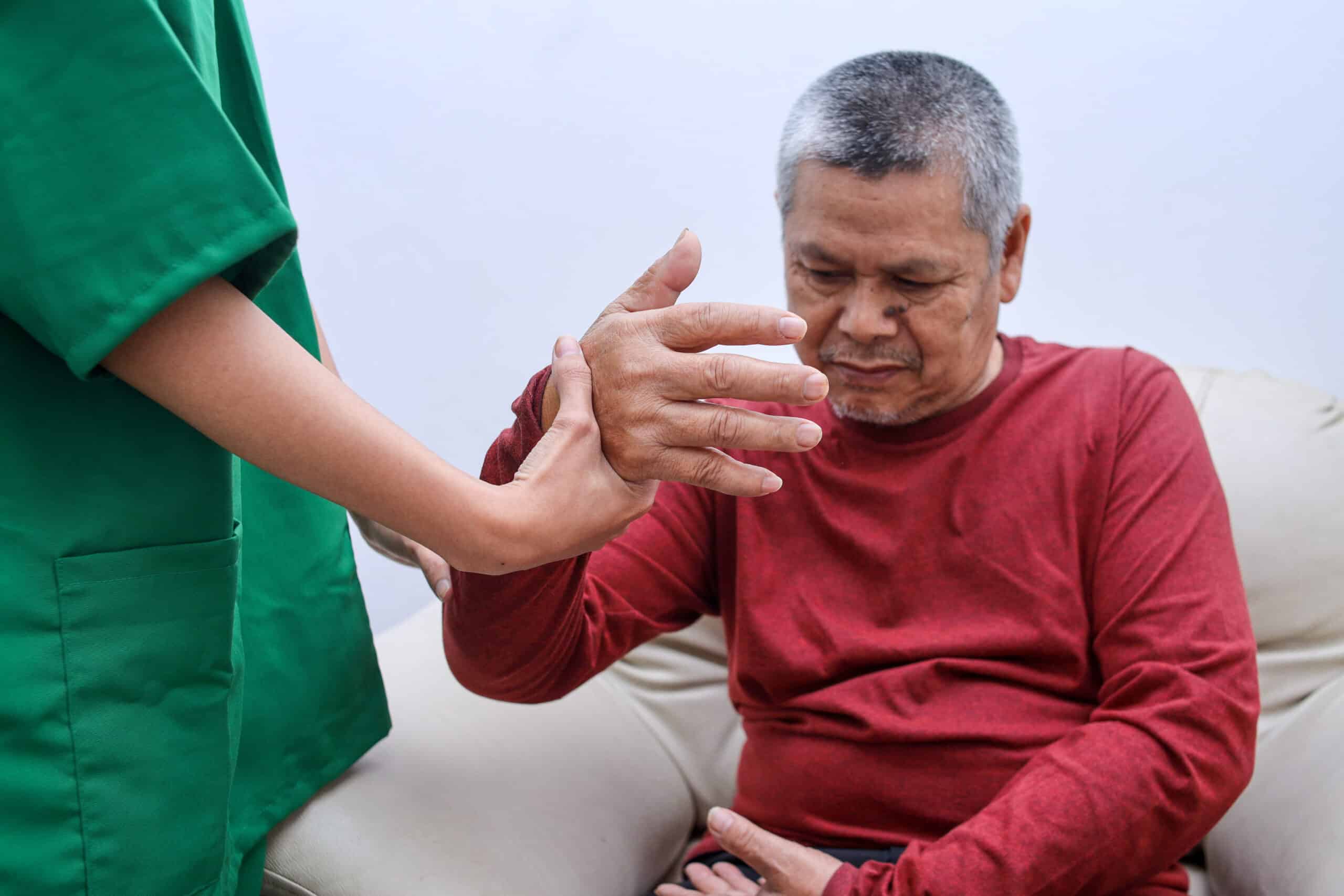
Are your tremors caused by Parkinson’s or by a condition that mimics it?
4 minutes read
- Dr Hubert Fernández, of Cleveland Clinic, explains which conditions look like Parkinson’s and why it matters that a neurologist makes the right diagnosis in time.
Cleveland. You may first notice a tremor in your hands, that you walk a little unsteadily, or that you feel stiff and slow. If you check the internet, you may conclude that you have Parkinson’s disease. Even your family doctor might diagnose this chronic, progressive neurological disease. But other conditions look a lot like Parkinson’s. And because they are treated differently, it is important to get a correct diagnosis as soon as possible.
“For a couple of conditions, the prognosis, the treatment and the advice are completely different from Parkinson’s”, says Hubert Fernández, MD, director of the Center for Neurological Restoration. A neurologist is the best option for determining whether you have Parkinson’s or something else, he says. Treatment decisions taken in the early stages of the disease can affect long-term success in managing the condition.
What looks like Parkinson’s but is not?
Dr Fernández describes two main Parkinson’s mimics:
Essential tremor. Also known as benign essential tremor or familial tremor, this movement disorder causes brief, uncontrollable shaking. It most often affects the hands, but it can also affect the head and neck, the voice box (larynx) and other areas. In rare cases it also affects the lower body.
But one clue can help distinguish essential tremor from Parkinson’s. “This is not an absolute rule, but if the tremor occurs at rest, it is often Parkinson’s. And if the tremor occurs in action, such as when you are writing or eating, it is an essential tremor”, says Dr Fernández.
About half of people with essential tremor have a family history of the condition. Unlike Parkinson’s, essential tremor is not generally seen as a progressive disorder and, if it is mild, it may not require treatment.
Doctors can prescribe medicines to reduce the tremors, but they are not the same medicines used to treat Parkinson’s, he says.
Drug-induced parkinsonism. Along with tremors, this condition can cause many symptoms similar to those of Parkinson’s disease, such as stiffness, slowness of movement, reduced facial expression and changes in speech.
As the name suggests, taking certain medicines, most commonly antipsychotics and mood stabilisers, can trigger this condition. How long it takes to develop can vary a great deal, depending on which medicine you are taking, how long you take it for and the dose. The doctor is likely to treat drug-induced parkinsonism by adjusting the medication.
“We always work with a psychiatrist as we taper down and try new medicines”, says Dr Fernández. “We want to do what is best for the body and what is best for the brain”.
Other neurological disorders fall into a category known as Parkinson’s plus syndromes, which can cause similar symptoms. Doctors generally treat these syndromes in the same way as they treat Parkinson’s disease.
“The medicines we prescribe are more or less the same as the ones we use for Parkinson’s, but we expect different results”, he says. “A diagnosis of essential tremor or drug-induced parkinsonism, however, would require completely different treatment”.
A correct diagnosis can save time
Because the symptoms of Parkinson’s disease vary and often overlap with other conditions, it is misdiagnosed in up to 30% of cases, says Dr Fernández. Misdiagnosis is even more common in the early stages. Patients who do not know where to turn may book appointments with a rheumatologist, an orthopaedic or heart specialist, and undergo MRI scans, EMGs and other expensive tests.
But only a neurologist can distinguish Parkinson’s from essential tremor, drug-induced parkinsonism and Parkinson’s plus syndromes, he says.
“If patients come to us with typical signs of Parkinson’s, we do not need to order expensive tests”, he says. Instead, neurologists base their diagnosis on a detailed examination of the patient and on the clinical history, along with other information from the patient, family members or carers.
“All of that goes into the pot”, he says. “Sometimes we can diagnose Parkinson’s in a single visit. Other times, several follow-up visits are needed”.
About Cleveland Clinic
Cleveland Clinic is a non-profit multispecialty academic medical centre that integrates clinical and hospital care with research and education. Located in Cleveland, Ohio, it was founded in 1921 by four renowned physicians with a vision of providing outstanding patient care based upon the principles of cooperation, compassion and innovation. Cleveland Clinic has pioneered many medical breakthroughs, including coronary artery bypass surgery and the first face transplant in the United States. U.S. News & World Report consistently names Cleveland Clinic as one of the nation’s best hospitals in its annual “America’s Best Hospitals” survey. Among Cleveland Clinic’s 81,000 employees worldwide are more than 5,743 salaried physicians and researchers and 20,160 registered nurses and advanced practice providers, representing 140 medical specialties and subspecialties. Cleveland Clinic is a 6,690-bed health system that includes a 173-acre main campus near downtown Cleveland, 23 hospitals, more than 276 outpatient facilities, and locations in southeast Florida; Las Vegas, Nevada; Toronto, Canada; Abu Dhabi, United Arab Emirates; and London, England. In 2023, there were 13.7 million total outpatient visits, 323,000 hospital admissions and observations, and 301,000 surgical cases across the Cleveland Clinic health system. Patients came for treatment from every state and 132 countries.
More stories
- Multidisciplinary care: a centralised model that speeds up the early detection of cancer
- TransUnion expands Juan Camilo Badel’s remit to strengthen its growth strategy in Central America, the Dominican Republic and Mexico TSI
- Cleveland Clinic is the first centre in Ohio to perform a nipple-sparing robotic mastectomy
- DiDi boosts connections with the Metro and Cable Car of Santo Domingo