Report presented revealing gaps and strengths in the diagnosis and management of breast cancer in the Dominican Republic
7 minutes read
- The research was carried out by experts from Two Oceans In Health and is endorsed by the National Cancer Institute (INCART).
- Breast cancer is the leading cause of death among Dominican women and the second cause of all cancer deaths in the country.
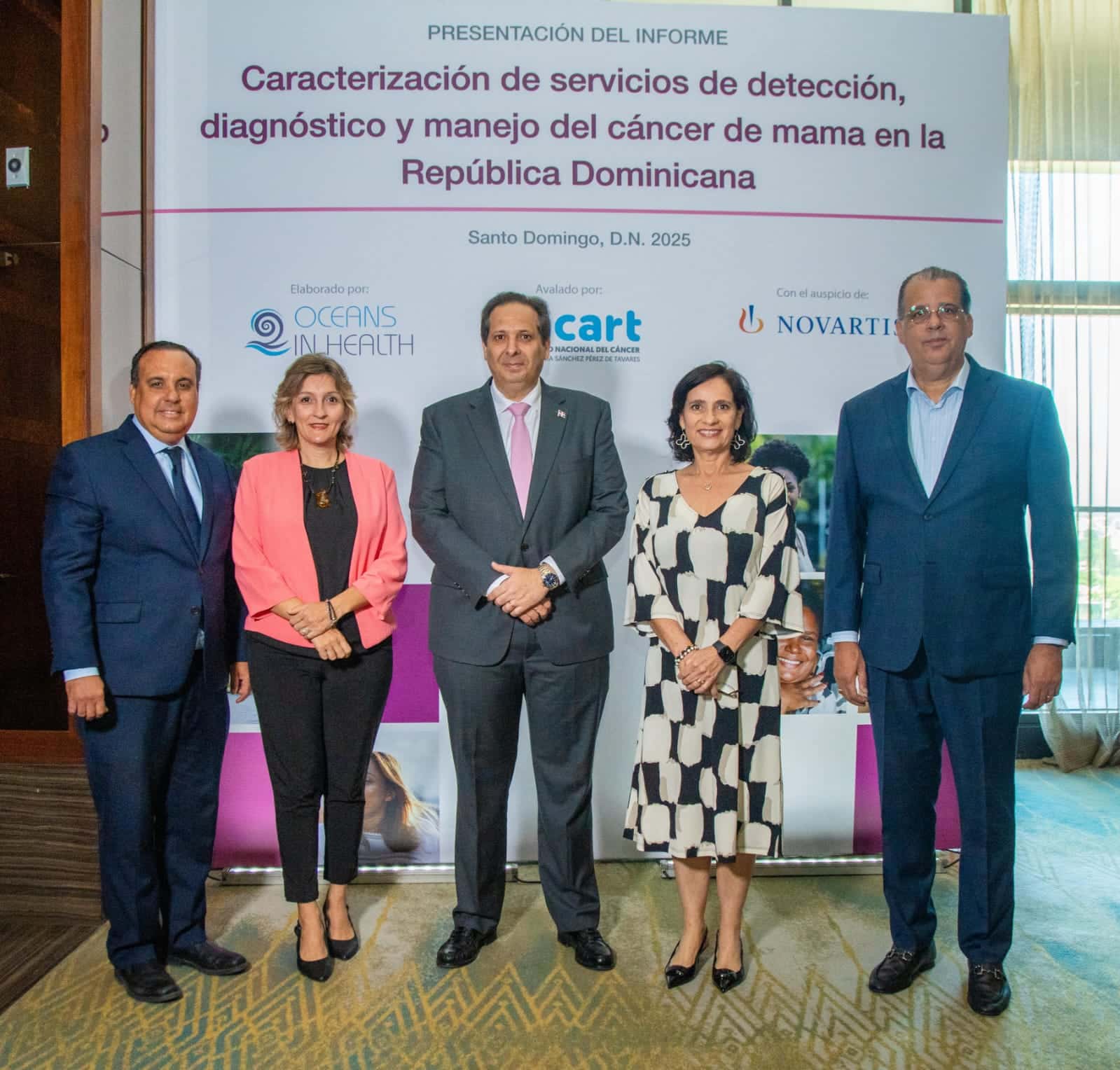
Dominican Republic, February 2025. – In the Dominican Republic, 4,201 people were diagnosed with breast cancer during 2023. Of those, more than 90% were women, according to figures from the Superintendency of Health and Occupational Risks (SISALRIL) contained in the report “Characterisation of breast cancer detection, diagnosis and management services in the Dominican Republic”, produced by Two Oceans in Health and presented this morning to the country’s authorities, academia, health service providers and patient groups.
The study – which is endorsed by INCART – identifies shortcomings and strengths in the national health system’s approach to breast cancer and includes recommendations for strengthening the response to the disease, which is the leading cause of cancer deaths among women in the country. It also sets out the total cost associated with breast cancer treatment covered by the health insurers (ARS), which in 2022 came to RD$1,912,605,082 (approximately USD 99,535,529), with more than 80% of that amount linked to high-cost medicines. The report also highlights progress and improvements in tackling the disease, identifies the main challenges in access to timely diagnosis and treatment, and offers some recommendations, among them assessing new alternatives for funding high-cost medicines, resuming the process of setting up the country’s Tumour Registry, and defining an agenda of priorities involving academia and other stakeholders.
“This is the first time a study has been carried out on the diagnosis and management of cancer in the Dominican Republic. On this occasion, a methodology known as the Rapid Assessment Process (RAP) was used, which made it possible to characterise the services available for the diagnosis and treatment of breast cancer, their quality and their relationship with current demand. There was an intensive collection of data, triangulated with primary and secondary sources, including both qualitative and quantitative data obtained from official sources, as well as from decision-makers, public health experts and service users, covering both the public and the private sector. This process has allowed us to identify gaps and opportunities that we hope will serve to guide and prioritise measures that can have a positive impact on the Dominican health system and above all on patients”, said Dr Marija Miric of Two Oceans in Health.
The report was led by Dr Marija Miric and Dr Eddy Pérez Then. It highlights the strengths and the opportunities for improvement in the Dominican health system’s breast cancer care around five strategic areas:
1. Information systems and data availability
2. Health systems and the organisation of services
3. Detection and diagnosis
4. Treatment
5. Support and follow-up
As regards information systems and data availability, the study reveals the lack of data and of a national tumour registry that could be used to guide public health decisions. It also points out that the statistics used rest on Globocan estimates and that there is limited management of local knowledge about breast cancer and the economic impact it has on those who suffer from it.
On the other hand, some strengths are noted, among them the existence of the SISALRIL database, as well as ministerial resolution 014-2020 which creates the Cancer Registry in the Dominican Republic, and the successful experiences with named-patient registry systems in some specialist facilities.
With regard to the health system and the organisation of services, the findings suggest a concentration of care in third-level public services, which leads to congestion and work overload for specialists. Likewise, high-cost funding is tied to the budget of the Ministry of Public Health, which significantly affects other departments and services of that body. This reflects the need to identify alternative mechanisms so that funding is approached in a more cross-sectoral way.
Despite these challenges, the study notes positively that the government sector gives high priority to the care of breast cancer patients and that it has increased the annual cover of the Basic Health Plan to RD$2,090,000, as well as the inclusion of multiple breast cancer diagnostic and treatment procedures within that plan in recent years.
In relation to detection and diagnosis, the study shows the negative impact of late detection of breast cancer, which raises costs and reduces the chances of cure and survival. On the other hand, it recognises positively the greater availability of new technologies, the cover of more than 15 procedures that contribute to diagnosis in the Basic Health Plan, and the involvement of user associations and women survivors with government prevention services, including the Breast, Cervical and Prostate Cancer Detection Programme, run by the National Health Service (SNS).
As for treatment, the report refers to delays in starting medication for diagnosed patients, congestion in national public referral centres, limited resources and inequity in access for the most vulnerable sociodemographic groups because of barriers of distance, transport costs and waiting times. At the same time, however, it recognises strengths associated with the significant broadening of the Basic Health Plan’s cover over the last 3 years, including breast reconstruction, preventive mastectomy, chemotherapy and radiotherapy, as well as 25 additional drugs.
Finally, on support and follow-up, the research findings show limited cover for psychology consultations and other support services in cancer treatment, physiotherapy, palliative care and home visits. It also underlines as a positive aspect the involvement of associations of users and women who have survived breast cancer as a support network during the treatment process.
“Following the thorough research process, the study sets out different recommendations for each strategic area, among them: urgently resuming the process of setting up the Dominican Republic’s Tumour Registry, having designated staff to guide users through the different services, formalising an accredited research unit -involving academia and research institutes- in charge of assessing the cost-effectiveness of including new molecules and technologies for diagnosis and treatment, as well as strengthening and formalising the role of associations of users and women survivors. There is no doubt that acting together could lead us to strengthen breast cancer care in our country”, said Dr Eddy Pérez Then, senior adviser to the study.
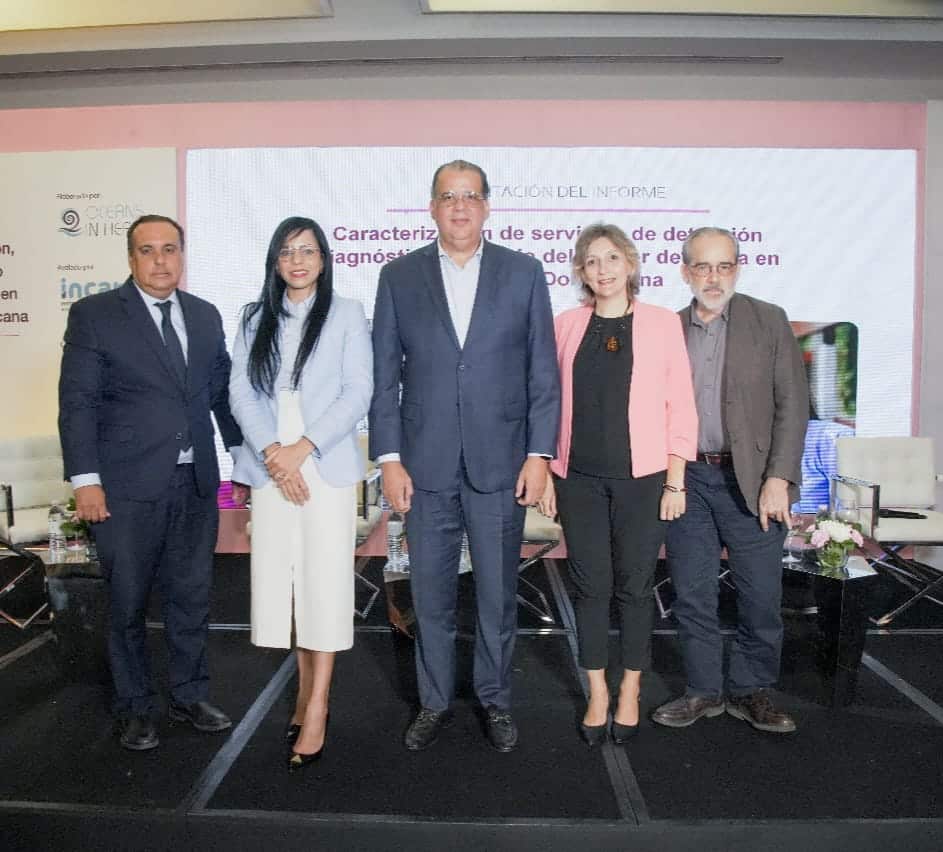
During the presentation of the findings of this research there was a panel discussion, in which researchers, government representatives and representatives of care centres discussed the future of breast cancer care in the country.
The study was sponsored by Novartis, which took no part in the research process. “At Novartis we are firmly committed to people’s health and wellbeing. This study represents a significant advance in understanding this disease and helps to identify clearly the priority areas on which to focus the attention of all those of us who in one way or another want to help strengthen scientific knowledge of this disease, optimise the use of available resources and make early detection and timely treatment of this disease easier in the Dominican Republic”, stressed the Medical Area Director for Novartis in ACC (Andes, Central America and the Caribbean), Dr Ana Polanco.
For more information, the study on the characterisation of breast cancer diagnosis and treatment services in the Dominican Republic is available on the website: Home – Two Oceans in Health
FACTS
• The Dominican Republic recorded 3,244 new cases of breast cancer, all in the female population, corresponding to 34.4% of new cancer diagnoses among women, according to the data published by Globocan 2022.
• Sisalril reports 4,201 new cases diagnosed in 2023, including 370 (8.8%) men.
• The total cost covered by the health insurers (ARS) in 2022 came to RD$1,912,605,082, with more than 80% of that amount linked to high-cost medicines.
About 2OiH
2OiH is a global health research centre dedicated to building knowledge that empowers the communities living in the Dominican Republic. Founded and led by recognised public health scientists, who bring first-rate academic backgrounds and methodological rigour, with decades of experience in research focused on different levels of the Dominican health system, community health and activities related to medical education. 2OiH also has a diverse team of experts, which allows a unique synergy between scientific rigour and social commitment.
About Novartis
Novartis is a company focused on innovative medicines. Every day we work to reimagine medicine to improve and extend people’s lives, so that patients, health professionals and societies are empowered to face serious diseases. Our medicines reach around 300 million people around the world.
More stories
- Multidisciplinary care: a centralised model that speeds up the early detection of cancer
- TransUnion expands Juan Camilo Badel’s remit to strengthen its growth strategy in Central America, the Dominican Republic and Mexico TSI
- Cleveland Clinic is the first centre in Ohio to perform a nipple-sparing robotic mastectomy
- DiDi boosts connections with the Metro and Cable Car of Santo Domingo