
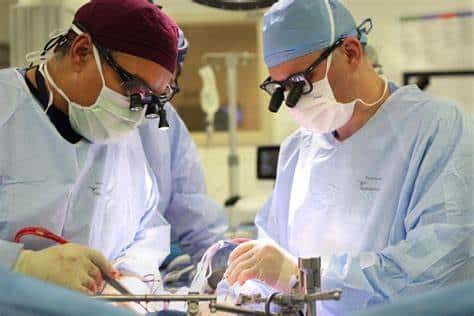
Cleveland Clinic, pioneers in the use of living organ donors for both paediatric and adult recipients
3 minutes read
- A living donor transplant has a significantly higher success rate than a deceased donor transplant.
- World Organ Donor Day is marked every 13 August.
Cleveland: – Most organ donations come from people who have died, after their families give permission. However, in some cases, a living donor can be another option for those who need a life-saving transplant.
Unfortunately, there are not enough organs from deceased donors for everyone who needs a transplant and, as a result, the number of people on the waiting list keeps growing. Because of this shortage, patients waiting for a liver may die in the process or be too ill to undergo surgery when their turn finally comes.

Dr. Choon David Kwon, director of Laparoscopic Liver Surgery at Cleveland Clinic, explained that a living donor can donate a kidney, a lobe of the liver, a lung or parts of a lung, pancreas or intestine.
A living donor transplant uses organs from a living, healthy person, in some cases taking only part of the organ. For a kidney transplant, only one of the kidneys is used. “For a liver transplant, the liver is split and we use a portion of it,” said the director.
He explained that, given the need for organs, living donors can be a great help, and they do not have to be related to the patient. Living donation has made more transplants possible in Cleveland Clinic’s global transplant programmes. “Strangers can also donate to each other.”
Advantages of a living donor over a deceased donor
A living donor transplant has many advantages over a deceased donor kidney transplant. The most important is a significantly higher success rate. Other reasons include: a kidney from a living donor usually works immediately after the transplant, whereas a kidney from a deceased donor may take several days or weeks to work normally.
A living donor transplant can be scheduled, giving the recipient and donor time to prepare. Recipients do not know when an organ from a deceased donor will become available, and surgery must take place very soon after it does.
There may be a lower risk of rejection, especially if the organ is donated by a relative. It can also shorten the time a recipient has to wait for a transplant. The average waiting time for a kidney from a deceased donor, for example, could be three to five years.
Laparoscopic living donor surgery
Cleveland Clinic’s surgical team has pioneered the use of living donors for both paediatric and adult recipients. Its living donation outcomes are among the best in the country. It is the only hospital in Ohio and Pennsylvania that performs the procedure and one of only a few hospitals worldwide.
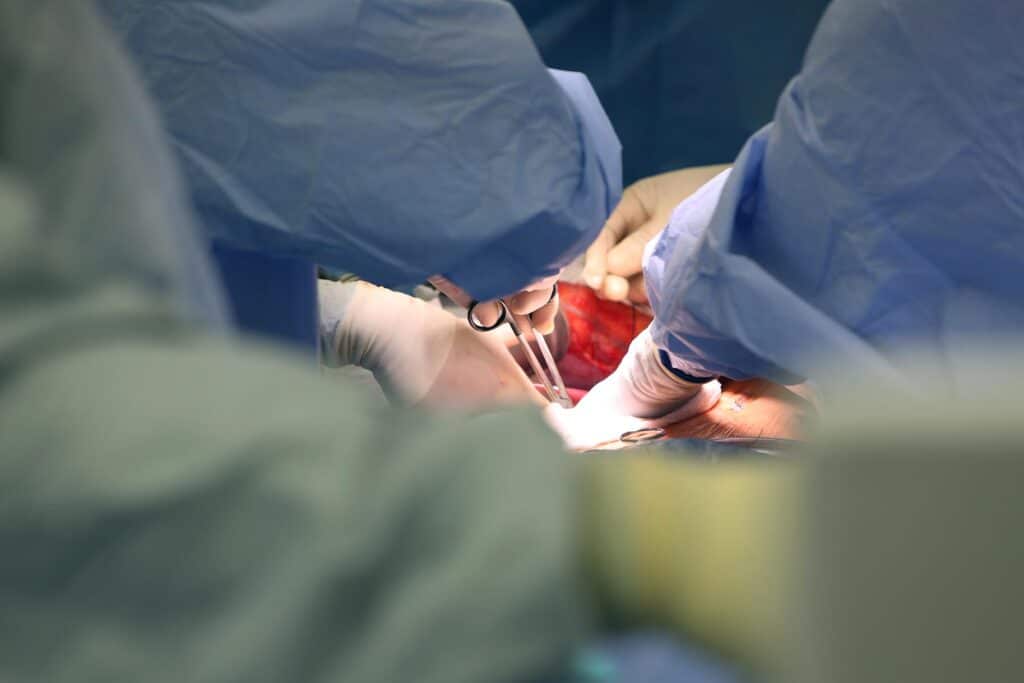
The Midwest’s first purely laparoscopic living donor surgery for liver transplantation in an adult recipient was performed in 2019, and this option is now available to donors. The result is smaller scars and faster recovery for donors.
With innovative approaches and teamwork, Cleveland Clinic’s global transplant programmes continue to grow to save more lives and bring joy to many families.
About Cleveland Clinic
Cleveland Clinic is a nonprofit multispecialty academic medical centre that integrates clinical and hospital care with research and education. Located in Cleveland, Ohio, it was founded in 1921 by four renowned physicians with a vision of providing outstanding patient care based on the principles of cooperation, compassion and innovation. Cleveland Clinic has pioneered many medical breakthroughs, including coronary artery bypass surgery and the first face transplant in the United States. Among Cleveland Clinic’s 77,000 employees worldwide are more than 5,658 salaried physicians and researchers, and 19,000 registered nurses and advanced practice providers, representing 140 medical specialties and subspecialties.
Cleveland Clinic is a 6,699-bed health system that includes a 173-acre main campus near downtown Cleveland, 23 hospitals, more than 275 outpatient facilities, including locations in northeast Ohio; southeast Florida; Las Vegas, Nevada; Toronto, Canada; Abu Dhabi, UAE; and London, England.
In 2022, there were 12.8 million outpatient encounters, 303,000 hospital admissions and observations, and 270,000 surgeries and procedures throughout Cleveland Clinic’s health system. Patients came for treatment from every state and 185 countries.
More stories
- Multidisciplinary care: a centralised model that speeds up the early detection of cancer
- TransUnion expands Juan Camilo Badel’s remit to strengthen its growth strategy in Central America, the Dominican Republic and Mexico TSI
- Cleveland Clinic is the first centre in Ohio to perform a nipple-sparing robotic mastectomy
- DiDi boosts connections with the Metro and Cable Car of Santo Domingo