
Multidisciplinary care: a centralised model that speeds up the early detection of cancer
3 minutes read
An unexpected finding on a CT scan does not mean cancer, but the wait to find out has a cost. The EDDx programme at the Mass General Brigham Cancer Institute speeds up early detection by bringing oncologists, radiologists and surgeons together.
Sometimes a CT scan or an MRI incidentally turns up unexpected abnormalities that may or may not represent cancer. Those findings can leave patients with uncertainty, fragmented follow-up and delays in their care, when in fact the earlier cancer is detected, the greater the chances of successful treatment and long-term survival.
Achieving early detection and speeding up access to specialists calls for a multidisciplinary care model for complex medical cases, able to coordinate the assessment of suspicious findings quickly. “Patients have the best chance of a good outcome if we can detect cancer at its earliest stage, often before symptoms appear,” says Lecia Sequist, MD, MPH, an oncology specialist at Mass General Brigham.
A suspicious finding does not necessarily mean cancer: the challenge lies in speeding up the diagnosis. To meet it, the Mass General Brigham Cancer Institute developed the Early Detection and Diagnostics Programme (EDDx), led by Sequist. By improving screening tests and the assessment of the findings they produce, the programme identifies people who may be at risk of developing cancer, connects them with the relevant doctors as quickly as possible, and provides high-risk patients with longitudinal care — continuous, comprehensive and structured follow-up — with the aim of reducing morbidity and mortality.
Unnecessary delays are eliminated through a centralised process that assesses suspicious findings and connects patients directly with a multidisciplinary team of oncologists, radiologists and surgeons. As soon as the team identifies a concerning lesion, it coordinates the next steps, whether further diagnostic imaging, biopsies, molecular testing (DNA testing, for example) or a referral to other subspecialists.
This kind of coordination shows the value of a comprehensive cancer centre for complex cases, where diagnosis, clinical specialties and treatment decisions can be brought together within a single system.
Early detection of lung and breast cancer
One type of unexpected finding is the pulmonary nodule — small rounded spots detected on X-rays and CT scans. Determining whether they are benign or an early-stage cancer can be done jointly by thoracic surgeons, interventional pulmonologists and cancer specialists, who coordinate to review patients and can draw up a full assessment and treatment plan from the start of care, saving valuable time and sparing patients logistical difficulties.
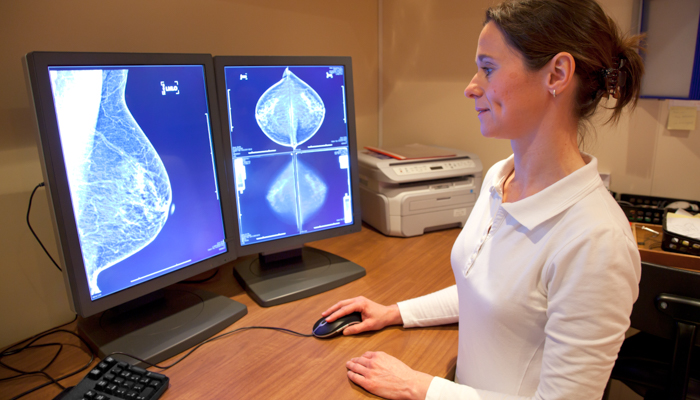
People with abnormal results on previous breast biopsies, patients with hereditary cancer syndromes or precancerous conditions, and those whose family history places them at risk, can undergo a multidisciplinary assessment. Close coordination between oncologists, breast surgeons and genetic counsellors gives patients uninterrupted access to more intensive screening and, where necessary, to treatments that reduce the risk of developing cancer.
This matters all the more given that the report Characterisation of breast cancer detection, diagnosis and management services in the Dominican Republic, produced by Two Oceans in Health, notes that in this country breast cancer is the second leading cause of cancer death, and the leading cause of cancer death among women.
Bringing specialist knowledge together in one place
Early detection does not depend solely on finding an abnormality, but on having a system able to interpret it, bring together the right specialists and coordinate the next steps. Combining multidisciplinary care, personalised assessment and a comprehensive cancer model can reduce fragmentation and speed up the patient’s journey from a suspicious finding to a clinical decision.
One of the main advantages of the Cancer Institute’s programme is the vast specialist knowledge available within a single integrated system, which is transforming medical care: instead of referring patients to doctors who are disconnected from one another, EDDx brings the specialists together in real time to guide decision-making.
Virtual consultations also widen access to care. In short, for medical oncologist Sequist the advantages of the programme are clear, at an Institute already moving towards “a future in which cancer is identified earlier, diagnosed faster and treated more effectively, improving outcomes for patients”.
More stories
- TransUnion expands Juan Camilo Badel’s remit to strengthen its growth strategy in Central America, the Dominican Republic and Mexico TSI
- Cleveland Clinic is the first centre in Ohio to perform a nipple-sparing robotic mastectomy
- DiDi boosts connections with the Metro and Cable Car of Santo Domingo
- Sustainable soybean field, a key input for feeding chickens, pigs and fish