

What does a breast cancer lump feel like?
6 minutes read
- Oncologist Amy Comander, of Mass General Brigham, explains which features of a breast lump should be watched and how to carry out a monthly self-examination.
Breast self-examination and body awareness are important for your health and wellbeing. But if you notice a lump or a change in your breasts, do not panic. Most turn out to be benign (non-cancerous) problems. Breast cancer is the most common type of cancer and the second leading cause of cancer death among women in the Americas.1

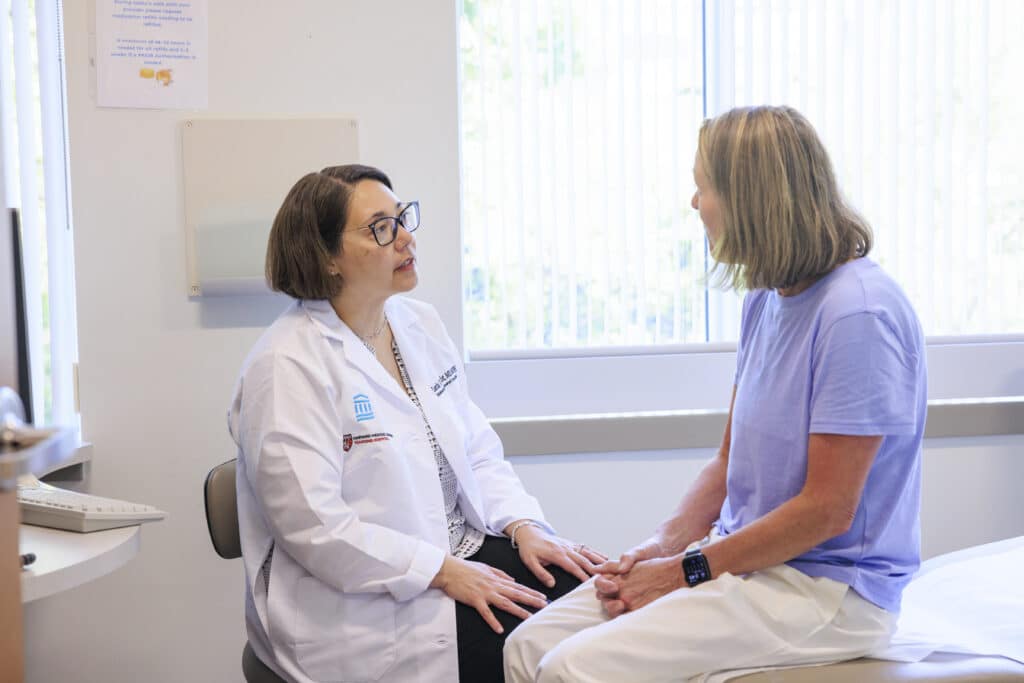
Amy Comander, MD, an oncologist, encourages people to check their breasts regularly and to know what to look for in their own bodies. Dr Comander is medical director of the Mass General Cancer Center at Mass General Waltham and director of the Breast Oncology Program at Newton-Wellesley Hospital.
“Everyone’s breast tissue is different. Many people have lumps in their breasts, which can sometimes change with the menstrual cycle. Most lumps are benign”, she says, adding: “Still, it is important that we are aware of our own bodies, so that if we notice a change, we know what to do about it. Breast self-examination is another tool we can use to take charge of our own health”.
If you notice a lump, Dr Comander suggests bearing in mind several specific factors, such as the shape, the size, whether the skin is involved and whether the lump causes pain. But if you have any doubt or question, make an appointment for a physical examination and a mammogram.
In Latin America, more than 462,000 new cases of breast cancer are reported every year, resulting in almost 100,000 deaths from this disease.2 Factors to bear in mind if you notice a lump in the breast tissue.
“There is a lot of misunderstanding and anxiety about doing a breast self-examination. People do not know exactly what to look for and are afraid of finding something that will make them panic”, explains Dr Comander. She describes several important features to bear in mind about breast tissue.
Skin changes
Look for any change in the skin on or around the breasts, such as:
- Bulging
- Dimpling
- Puckering
- Redness or a rash
- Pain
- Swelling
- Thickening or flaking
Many things can cause skin changes, such as infections, eczema and allergies. These symptoms are therefore not necessarily signs of breast cancer. Even so, it is important to seek medical attention if you notice them, according to Dr Comander.
Pain
Most breast tumours do not hurt, although some may cause some pain. Pain in the breasts can indicate an ingrown hair, a blocked milk duct, a cyst, a swollen gland or another problem. In the Dominican Republic, according to the Ministry of Health, 35% of malignant tumours diagnosed are breast cancer, and 70% of Dominican women diagnosed with this disease begin treatment when the disease is already advanced.³
Shape and size of a breast lump
A tumour may feel more like a rock than a grape. A cancerous lump is usually hard, not soft or spongy. It often has angular, irregular and asymmetrical edges, rather than being smooth, explains Dr Comander. To be able to feel a cancerous lump, it probably has to be quite large and closer to the surface of the skin. It is harder to feel breast tumours less than a centimetre across.
“Most breast cancers in the United States are detected by mammogram, and they are usually quite small. We like it that way: when we detect cancer while it is tiny, we have a better chance of curing our patients and of using less aggressive treatments to do so”, she says.
Mobility
If you find a lump in the breast, Dr Comander suggests trying to move it. “If it is more fixed in place, that would be more concerning, as opposed to a lumpy area that is more mobile”, she explains. “For example, a lump that changes position or feels different when you push it, raise your arm or lie down is less likely to be a tumour”.
“We should be aware of our own bodies and of how our breast tissue feels. That way, if at some point you identify a lump or bump in the breast, you will know whether it is new and will be able to tell a health professional about it”.
The importance of breast self-examination
Self-examination is essential for timely diagnosis and treatment; in the Dominican Republic, 59.1 of every 100,000 women have breast cancer, with a mortality rate of 26.4%. ⁴
Medical experts often debate the value of breast self-examination in detecting breast cancer early. Dr Comander has seen how useful it is in her own patients.
“Many of my patients identified a lump in the breast that led to their diagnosis. That is why I believe breast self-examination is important”, she says. “We should be aware of our own bodies and of how the breast tissue feels. That way, if at some point you identify a lump or bump in the breast, you will know whether it is new and will be able to tell a health professional about it”.
However, she says that nothing replaces a mammogram. Regular mammography is the most effective tool for detecting breast cancer.
How to do a breast self-examination
Dr Comander offers these step-by-step instructions for breast self-examination:
- Choose a specific day to do the examination each month. For example, the first or the last day of each month, or the same number as your birthday. Do not choose a day too close to your menstrual cycle, since hormones can affect how your breasts feel.
- Take off your top and bra, and look at your breasts in the mirror. Note whether they are the usual size, shape, colour and symmetry. Look for any change in the skin, the nipples or the breasts in general.
- Raise your arm above your head and look again. Do not forget to look under the breasts and in the armpits. Repeat this with the other arm raised.
- Lie down. Then press with the pads of a few fingers over every area of the breast and armpit. Use your right hand on the left breast, and vice versa. A circular pattern can help you make sure you cover the whole area.
Dr Comander recommends monthly self-examination for:
- Cancer survivors, in addition to frequent follow-up and screening appointments.
- Women of all ages, whether or not they are at high risk of breast cancer.
- Men from the age of 35 with a family history of breast cancer or certain genetic mutations.
Guidelines are also emerging for transgender people, who may be at greater risk because of hormone therapy. Transgender women should self-examine and be assessed if they have had oestrogen/progestogen therapy for more than five years, have a family history or a body mass index above 35. Transgender men who have had a bilateral mastectomy have a small but not zero risk of breast cancer, so clinical examinations should include an examination of the chest wall.
What to do if I find a lump in my breast
If you notice any lump or change, remember that there are many possible causes. It is important not to panic and simply to arrange an appointment with your primary care provider (PCP) or gynaecologist.
“At the Mass General Cancer Center, we have breast centres at many of our locations with surgeons and nurse practitioners who can assess any change”, says Dr Comander. “It is important that people feel empowered so that, if they feel something concerning, they ask for an appointment for a fuller assessment”.
1 Panamerican Health Organization.
More stories
- Multidisciplinary care: a centralised model that speeds up the early detection of cancer
- TransUnion expands Juan Camilo Badel’s remit to strengthen its growth strategy in Central America, the Dominican Republic and Mexico TSI
- Cleveland Clinic is the first centre in Ohio to perform a nipple-sparing robotic mastectomy
- DiDi boosts connections with the Metro and Cable Car of Santo Domingo