
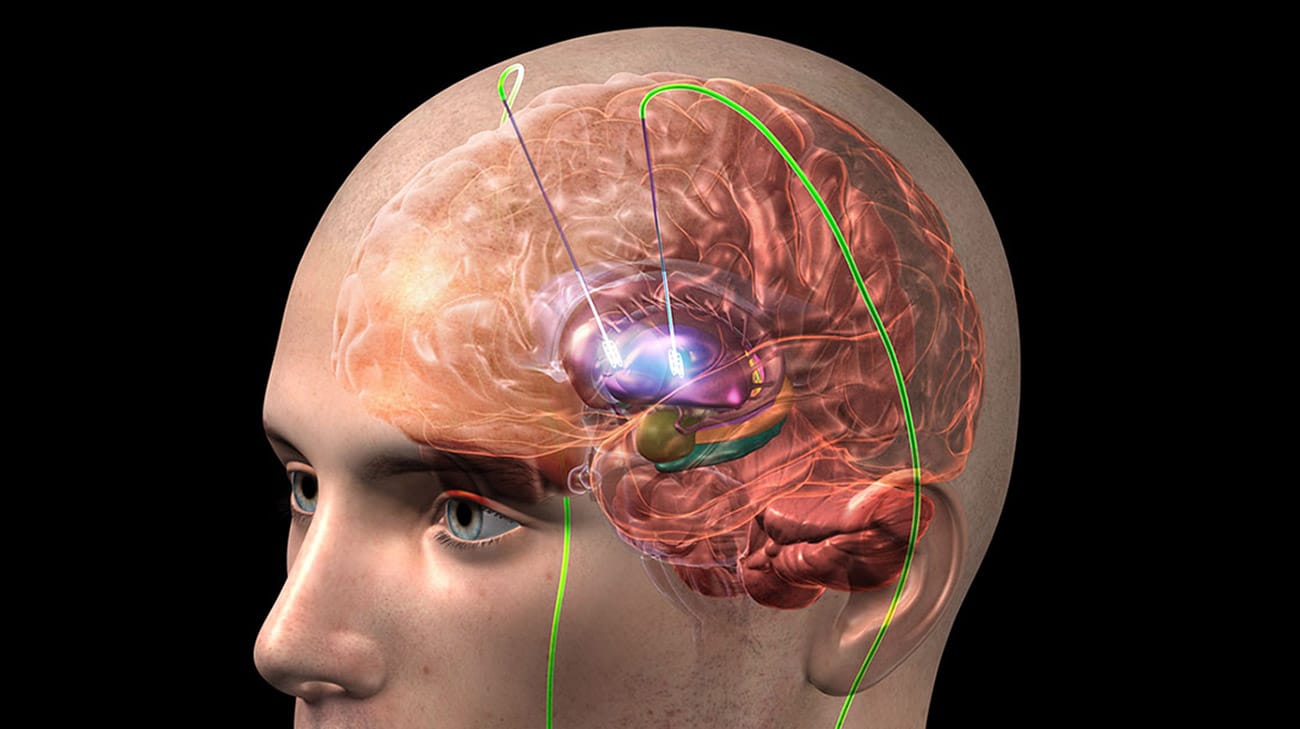
Deep brain stimulation surgery brings relief from Parkinson’s tremors
3 minutes read
- After almost two years of living with Parkinson’s tremors, Donald Liles regained his quality of life thanks to deep brain stimulation surgery at Cleveland Clinic.
April 2022.- Donald Liles, 74, of Hollywood, Florida, spent almost two years living with tremors in his hands that sometimes became so severe he couldn’t button his shirt, feed himself or do any other simple task.
The tremors in his hand were caused by Parkinson’s disease, a neurological disorder that causes tremors, stiffness and problems with balance and coordination.
He tried a variety of medications, but none helped. His only hope became a surgical procedure to implant electrodes in his brain: Deep Brain Stimulation (DBS).
Among the most common symptoms of Parkinson’s are tremors that start in the hands and arms. They can also occur in the jaw or feet. In the early stages of the disease, usually only one side of the body or one limb is affected. As the disease progresses, the tremor can spread more widely.
Dr. Badih Adada, chair of the Department of Neurosciences at Cleveland Clinic Florida, performed Donald Liles’s procedure, which involved implanting electrodes in the brain that deliver electrical impulses to block or change the abnormal activity causing the symptoms.
“By stimulating those areas, we can regulate movement again and stop the symptoms,” said Dr. Adada. “Patients can resume their normal activities and even play contact sports,” he said.
Deep brain stimulation, a surgical treatment for Parkinson’s disease
Most patients with Parkinson’s disease can maintain a good quality of life with medication. However, as the disease worsens, medication may no longer be effective in some patients.
In these patients, the effectiveness of medication becomes unpredictable, reducing symptoms during “on” periods and no longer controlling them during “off” periods, which usually occur when the medication is wearing off and just before the next dose is taken. Sometimes these fluctuations can be managed with changes in medication. At other times, however, they cannot.
Depending on the type and severity of symptoms, the failure of medication adjustments, and a decline in quality of life and overall health, doctors consider the surgical options available.
Deep Brain Stimulation (DBS) can treat most of the main movement symptoms of Parkinson’s disease, such as tremor, slowness of movement (bradykinesia) and stiffness (rigidity).
DBS does not improve memory, hallucinations, depression or the other non-movement symptoms of Parkinson’s disease. Only patients whose symptoms are not controlled despite medication trials and who meet other strict criteria may be candidates for DBS.
Likewise, DBS is used to treat a variety of neurological and movement disorders, including Parkinson’s disease, essential tremor, epilepsy, dystonia and obsessive-compulsive disorder. It is also being studied for use in other conditions, such as depression, addiction and multiple sclerosis.
“The first time they switched on the DBS system was incredible. I stopped shaking,” recalls Donald Liles. “I saw results immediately. From that moment on, I didn’t need as much energy and I could sleep peacefully again.”
Find out more about AF comunicación estrategica and its clients
More stories
- Public Health, the Dental Association and ADTS drive medical and dental tourism
- Alejandro Cambiaso presents the Dominican Republic’s health tourism success story in Guatemala and calls for a stronger regional vision for Latin America
- ADTS and AF Comunicación announce the 8th International Health and Wellness Tourism Congress 2027
- Internal Communication as a strategic tool for organisational management