Dominicans stand out at Huawei’s “Seeds for the Future 2024” Latin America and Caribbean Summit
4 minutes read
132 young leaders complete a week of innovation and collaboration for the region’s digital future.
El Salvador. UNESCO and Huawei, a global leader in information and communications technology (ICT) infrastructure, successfully concluded the Seeds for the Future 2024 Latin America and Caribbean Summit, a key event in the region that brought together 132 outstanding students from Latin America and the Caribbean.
The programme, part of Huawei’s flagship Corporate Social Responsibility initiative, was held in El Salvador from 25 to 31 August, offering young people a platform for learning, innovation and creating sustainable technology solutions.
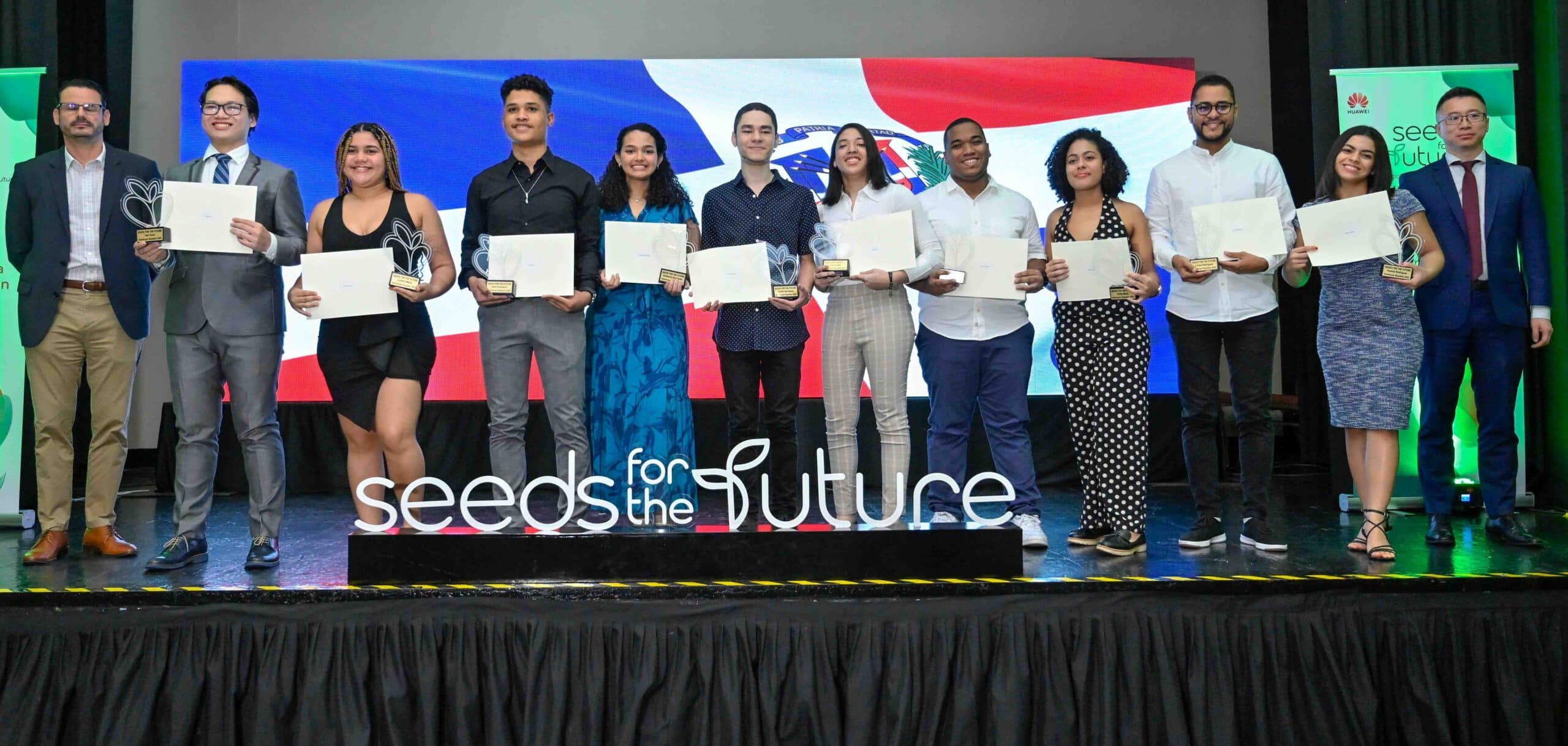
Dominican students made it into the top 10 semi-finalists of the Tech4Good project with their innovative project designed to prevent flooding in vulnerable urban areas.
The project, developed as part of Huawei’s “Seeds for the Future” programme, focuses on implementing an advanced monitoring system to prevent deaths, damage to infrastructure and traffic congestion.
The team, made up of Erick García, Hamlet Tineo, Axel Javier López and Gabriel Cepeda García, created a solution that uses sensor technology and real-time data analysis to identify risk areas and issue early warnings, which will be managed in a disaster prevention data centre.
A great success
The summit was attended by Félix Ulloa, Vice President of El Salvador; Suecy Callejas, Vice President of El Salvador’s Legislative Assembly; José Mauricio Pineda, El Salvador’s Minister of Education; and other government officials from El Salvador, the Dominican Republic, Honduras, Trinidad and Tobago and Mexico, who shared their ideas and success stories from technological and educational innovation projects.
“We are in the middle of the digital age. That is why, six years ago, President (Nayib) Bukele made a promise to promote technological development in El Salvador. We began with the Enlaces con la Educación programme, and in this second term the country has become a cutting-edge global benchmark; our next generation of students will be 100% digital natives, as they are being educated with an innovative system using artificial intelligence,” said Félix Ulloa.
Representing Huawei, Michael Xue, Vice President of Huawei Latin America and the Caribbean, said: “So far, we have invested more than 10 million dollars in these programmes, helping more than 300,000 people from more than 20 countries in the region improve their digital skills.” He continued: “Over the next three years, UNESCO and Huawei will launch a new strategic partnership in the region, focusing on developing digital ICT talent. This is part of our ongoing efforts to help cultivate broader digital talent development, and we hope these efforts will benefit 3,000 more students and young people.”
The closing ceremony included a panel discussion led by Romina Kasman, Head of Education at UNESCO for Central America, Colombia and Mexico, with panellists Alejandro Martínez, Dean of the Faculty of Engineering, Universidad de Buenos Aires, Argentina; Germán Galván, Director of Communication, International Youth Organisation for Ibero-America (OIJ); Herik Germán Valles Vaca, Executive Director of Academic Innovation, ANUIES, Mexico; and Paula Ferrari, Director of Communications and Marketing, GSMA LATAM. They shared ideas on ensuring diversity and inclusion in digital talent development in the region.
Tech4Good Awards: Celebrating Innovation
One of the highlights of the ceremony was the presentation of the Tech4Good competition awards. The Top 2 regional Tech4Good project winners were the KIM project from Guatemala and Li+ from Argentina, recognised for their significant impact on their communities. The Most Innovative Award went to the Electro Mat project from Jamaica for its revolutionary solution for generating electricity from mechanical vibrations, and the Social Expert Award went to the Brazilian team.
About the winning projects
Li+, Transforming lithium battery recycling with advanced technology
The Argentine team of Nahiara Inés Orgoñ, Lautaro Márquez Locaso, Lourdes Ríos and Alejandro Simonutti developed LI+, a solution that tackles mass lithium extraction. Using artificial intelligence and computer vision, it analyses and diagnoses batteries to determine whether they can be reused or recycled.
KIM, Your voice, your action, an app against workplace harassment
Guatemalans Elisa Samayoa, Astrid García, Laura Levi and Maria del Mar Rosado developed KIM, a platform/software that uses artificial intelligence to identify and follow up anonymous reports of workplace harassment, especially of Guatemalan women.
In addition, three projects shared third place in the competition: SOTZ from Guatemala, Electro Mat from Jamaica and NSCAN from El Salvador.
Seeds for the Future, 10 years of innovation in Latin America and the Caribbean
Since its launch in Latin America in 2014, the Seeds for the Future programme has trained more than 2,100 students from 20 countries, providing training in cutting-edge technology and promoting enriching cultural exchange. With the programme’s expansion through the Seeds for the Future 2.0 initiative, Huawei has pledged to invest 150 million dollars by 2026, benefiting more than 3 million young people worldwide.
The “Seeds for the Future 2024” Latin America and Caribbean Summit reaffirmed Huawei’s and UNESCO’s commitment to creating an inclusive digital ecosystem in Latin America, where young talent is being prepared to lead the change towards a fairer, more sustainable technological future.
More stories
- Multidisciplinary care: a centralised model that speeds up the early detection of cancer
- TransUnion expands Juan Camilo Badel’s remit to strengthen its growth strategy in Central America, the Dominican Republic and Mexico TSI
- Cleveland Clinic is the first centre in Ohio to perform a nipple-sparing robotic mastectomy
- DiDi boosts connections with the Metro and Cable Car of Santo Domingo