
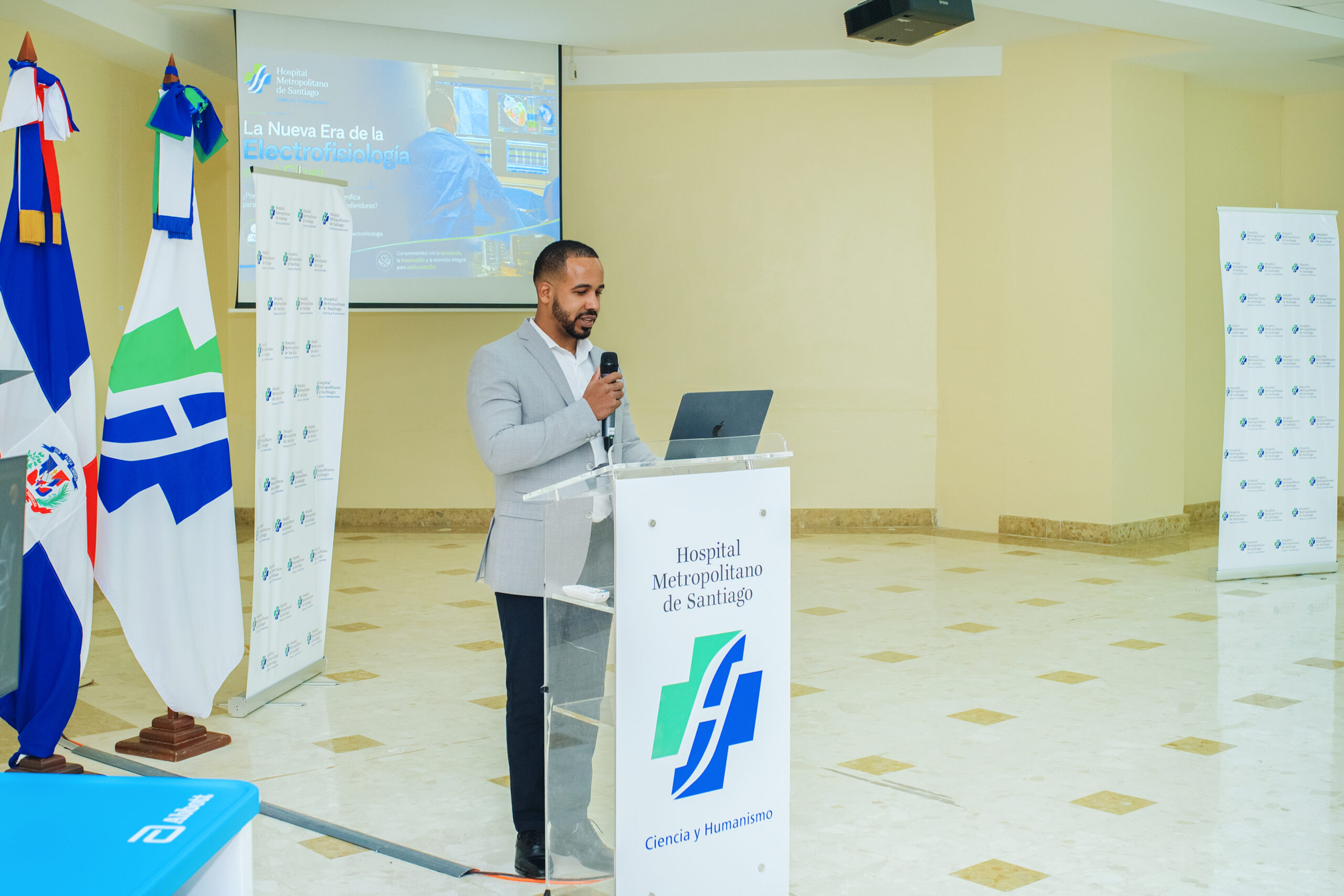
HOMS drives the advance of cardiac electrophysiology in the Dominican Republic
3 minutes read
- New technologies make it possible to treat complex arrhythmias, while specialists stress the importance of early detection and timely access.
Santiago, Dominican Republic. – Cardiac electrophysiology has grown significantly in the Dominican Republic, moving from mainly diagnostic procedures and conventional treatments to interventions for complex arrhythmias using three-dimensional navigation and technologies such as pulsed field ablation.
“HOMS is expanding its capacity to diagnose and treat arrhythmias with specialised technology, bringing high-level care to our patients without them having to travel outside the region. We expect to identify arrhythmias earlier, treat them in good time and reduce their complications. That can mean fewer symptoms, fewer hospital stays and, above all, a better quality of life for our patients. Coordinated work between electrophysiologists, cardiologists, imaging specialists, interventional cardiologists, cardiovascular surgeons and intensive care doctors allows for safer, timelier and more personalised decisions, always putting the patient at the centre of care,” explained cardiologist Santiago García, director of the HOMS Cardiovascular Centre.
Dr Rafael Sánchez Español, president of HOMS, also stressed that “we are taking an important step by strengthening our Electrophysiology Unit and Dominican cardiology, adding new capabilities for diagnosing and treating heart rhythm disorders. This unit complements the all-round capacity of our Cardiovascular Centre, so that patients find in one place an ever more complete answer to their cardiovascular needs. Convinced that Santiago and the whole northern region deserved a health institution able to grow at the pace of advances in medicine, we will keep developing every department of the Hospital Metropolitano de Santiago.”
Dr Rubelin Mosquea, cardiologist, interventional electrophysiologist and coordinator of the Cardiovascular Centre’s Arrhythmia Unit, explained it in the same terms, noting that the country now has centres able to offer treatments comparable to those performed internationally.
The most frequent arrhythmias include atrial fibrillation, supraventricular tachycardias, atrial flutter, extrasystoles and bradycardias caused by heart block. They can show up as palpitations, dizziness, fainting, shortness of breath, chest pain or reduced physical capacity, and some can lead to complications such as strokes, heart failure or sudden death.
The specialist pointed out that early detection makes it possible to intervene before complications appear. Repeated palpitations, a pulse that is very fast, very slow or irregular, and a family history of sudden death should all prompt a medical assessment.
Advances in technology have widened the options available in the country, including three-dimensional navigation, radiofrequency ablation, pulsed field ablation, pacemakers, resynchronisation devices, defibrillators and insertable cardiac monitors. The Arrhythmia Unit at the HOMS Cardiovascular Centre also has technologies such as EnSite X and FARAPULSE.
“They have completely changed the outlook for many patients. That means fewer symptoms, fewer hospital stays, lower mortality, greater safety and a better quality of life,” said Mosquea.
He considers that one of the main challenges is still widening access to these treatments, given geographical differences, limits on insurance coverage and the cost of specialised equipment and materials. He also called for stronger training of electrophysiologists and for specialised services to be decentralised.
Finally, he stressed the importance of controlling factors such as high blood pressure, diabetes, obesity, smoking, a sedentary lifestyle and sleep apnoea, as well as making timely diagnosis easier, strengthening referral routes and promoting cardiopulmonary resuscitation and public defibrillation programmes.
About HOMS The Hospital Metropolitano de Santiago (HOMS) is the leading private hospital in the north of the Dominican Republic and one of the most advanced in the region. Accredited by Accreditation Canada at Platinum level, it meets more than 1,800 international standards in medical care, patient safety and quality of care.
More stories
- Multidisciplinary care: a centralised model that speeds up the early detection of cancer
- TransUnion expands Juan Camilo Badel’s remit to strengthen its growth strategy in Central America, the Dominican Republic and Mexico TSI
- Cleveland Clinic is the first centre in Ohio to perform a nipple-sparing robotic mastectomy
- DiDi boosts connections with the Metro and Cable Car of Santo Domingo