
Is itchy skin a sign of cancer?
4 minutes read
- Up to half of adults with persistent itching receive a medical diagnosis; oncologist James Isaacs, of Cleveland Clinic, explains when that symptom may be related to cancer.
Santo Domingo. Itchy skin can be more than just a nuisance. In fact, itching that does not go away can be a sign of an underlying disease. Up to 50% of adults with persistent itching are diagnosed with a health condition. “If you have itchy skin that will not go away, it is important to understand what is causing it”, says Cleveland Clinic medical oncologist James Isaacs.
The connection between cancer and itchy skin
Anything from minor skin irritations to chronic diseases can cause itchy skin, and yes, it can also be a symptom of cancer. Although itchy skin is not the most common symptom of cancer, a study of almost 17,000 adults found that people with itchy skin may be five times more likely to have cancer than people without it. It is also a frequent reaction to certain cancer treatments.
Cancers that cause itchy skin
Many people with cancer experience itchy skin (pruritus) at some point, says Dr Isaacs. Itchy skin associated with cancer can occur when:
- Bile, a fluid released by the liver to help with digestion, builds up under the skin because of a tumour.
- Inflammation occurs in response to cancer cells.
- The body reacts to the substances released by a tumour.
Cancer-related itching often has certain characteristics. Generally it:
- Does not include a rash or hives.
- Occurs in response to water or with no explanation.
- Occurs all over the body.
- Comes with other symptoms such as fatigue, loss of appetite and weight loss.
But sometimes itching is a symptom of certain types of cancer.
Gastrointestinal (GI) cancers
The gastrointestinal (digestive) system uses bile to break down food. However, a tumour in the digestive tract can block the ducts (bile ducts) that carry bile from the liver to the gallbladder. When that happens, bile can build up and increase the amount of bilirubin (a substance found in bile) in the blood.
Blood cancers
Blood cancers involve white blood cells, red blood cells or bone marrow, the spongy centre of the bones. Nobody knows for certain why blood cancers can cause itching, but some experts believe that cancerous blood cells may release chemicals that irritate the nerve endings in the skin. “Itching can be a sign of some blood cancers”, says Dr Isaacs, “but it is not a classic symptom for most of those diseases”.
Skin cancers
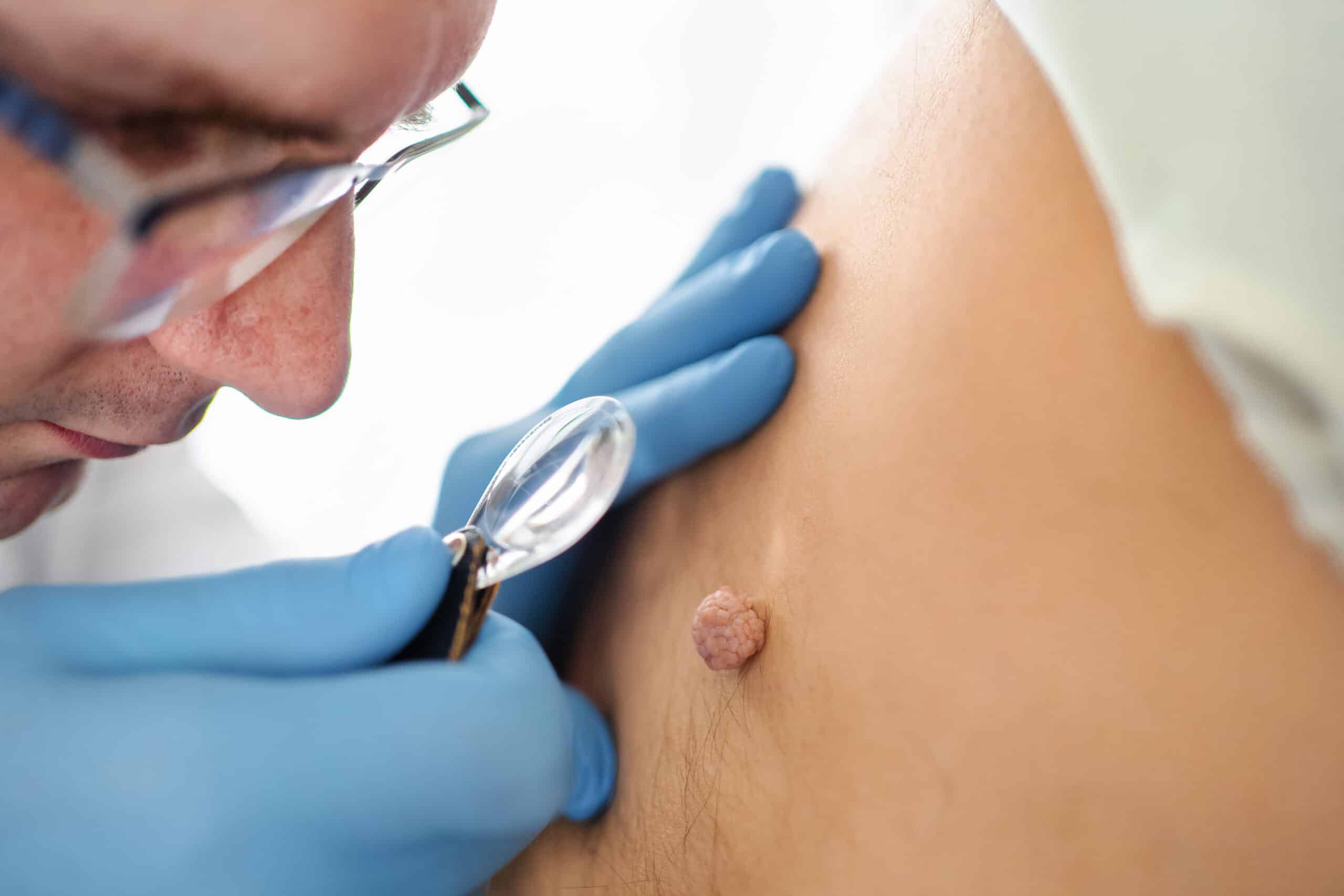
Skin cancer can cause itchy skin, but not always. Melanoma, the most dangerous skin cancer, is the least likely to itch.
“A benign (non-cancerous) mole should not cause pain, bleeding or itching, and should not change in size or shape”, says Dr Isaacs. He adds that itchy skin is rarely the only sign of skin cancer. “If you have any skin symptoms, a medical professional should examine them”.
If you are worried about itchy skin and cancer
“If you are up to date with your screening tests, have had lab work done and a healthcare provider has reviewed your symptoms, the itchy skin is probably not caused by cancer”, says Dr Isaacs.
But remember: itchy skin is usually a sign of an underlying medical problem, even if that medical problem is not cancer. If it will not go away, keep looking for answers.
“Skin conditions and diseases such as liver and kidney failure can contribute to itching”, he reiterates, “so it is always important to see a healthcare provider about persistent itching”.
About Cleveland Clinic
Cleveland Clinic is a non-profit multispecialty academic medical centre that integrates clinical and hospital care with research and education. Located in Cleveland, Ohio, it was founded in 1921 by four renowned physicians with a vision of providing outstanding care based upon the principles of cooperation, compassion and innovation. Cleveland Clinic has pioneered many medical breakthroughs, including coronary artery bypass surgery and the first face transplant in the United States. Cleveland Clinic is consistently recognised in the U.S. and throughout the world for its expertise and care. Among its 82,600 employees worldwide are more than 5,786 salaried physicians and researchers and 20,700 registered nurses and advanced practice providers, representing 140 medical specialties and subspecialties. Cleveland Clinic is a 6,728-bed health system that includes a 173-acre main campus near downtown Cleveland, 23 hospitals and 280 outpatient facilities, including locations in northeast Ohio; Florida; Las Vegas, Nevada; Toronto, Canada; Abu Dhabi, United Arab Emirates; and London, England. In 2024, there were 15.7 million outpatient visits, 333,000 hospital admissions and observations, and 320,000 surgeries and procedures across the Cleveland Clinic health system. Patients came for treatment from all 50 states and 112 countries.
More stories
- Multidisciplinary care: a centralised model that speeds up the early detection of cancer
- TransUnion expands Juan Camilo Badel’s remit to strengthen its growth strategy in Central America, the Dominican Republic and Mexico TSI
- Cleveland Clinic is the first centre in Ohio to perform a nipple-sparing robotic mastectomy
- DiDi boosts connections with the Metro and Cable Car of Santo Domingo