

Metabolic liver disease: prevalence expected to rise due to increasing obesity and diabetes
4 minutes read
- It has no symptoms, and by the time it can be detected the disease is at an advanced stage or the patient already has cirrhosis.
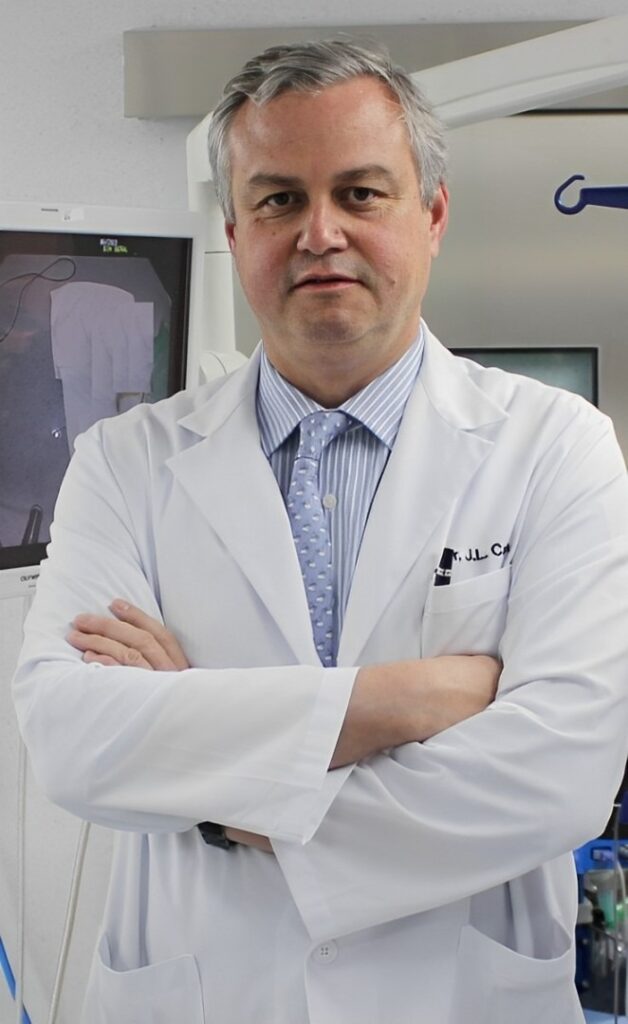
Santo Domingo: – Metabolic Liver Disease (MASLD) is a condition characterised by excessive fat in the liver, associated with several risk factors such as diabetes mellitus and obesity, explains Dr. José Luis Calleja, head of the Gastroenterology-Hepatology service at the Hospital Universitario Puerta de Hierro in Madrid.
The specialist, who is also an international adviser to the country’s first Hepatology Unit at the Hospital Metropolitano de Santiago (HOMS), adds that MASLD can be simple, when there is only fat in the liver, or involve fat-related inflammation, called steatohepatitis. Over time, this inflammation can lead to fibrosis, a more serious liver disease, which can even result in cirrhosis.
Dr. Christie Perelló, gastroenterologist and hepatologist and director of the HOMS Hepatology Unit, said MASLD is now the most common chronic liver disease and its prevalence is expected to rise in the coming years as risk factors such as obesity and diabetes increase.

In an interview ahead of the First Clinical Hepatology Course, to be held on 13 July at the convention centre of the HOMS Health and Wellness Center in Santiago, both specialists said MASLD has become a significant health problem requiring specific action for its detection, as it is associated with a higher risk of cardiovascular events, chronic kidney disease, cancers outside the liver, liver cancer and liver failure.
All these events carry a heavy socio-economic burden and represent a challenge for global health. “This should therefore command the attention of scientific societies and governments; we need to make every effort to address these health problems, because they have an impact in terms of cost and the events patients may experience,” says Dr. Christie Perelló.
Prevalence
Globally, around 25% of people have MASLD, meaning one in four people has it. In countries such as the Dominican Republic this figure is probably higher, closer to 35%, meaning 1 in 3 people may have fat in the liver, explains Dr. Calleja.
“There is an obesity epidemic. You only need to walk down the street, not just in the Dominican Republic but anywhere in Europe or the United States, and the problem gets worse when we see that in these countries 40% of children are overweight or obese; these are patients who will soon have a fatty liver,” explains Dr. Calleja.
Causes and symptoms
Common causes include poor eating habits, a sedentary lifestyle and excessive alcohol consumption. Alcohol-related damage in these patients is exponential. The hepatologists stress that alcohol, even in small amounts, practically increases the chances of cirrhosis tenfold in an obese patient with fatty liver.
MASLD has no symptoms; by the time it can be detected, the disease is at an advanced stage or the patient already has cirrhosis. This is one of the reasons for holding the course: to make primary care doctors, internists, gastroenterologists, cardiologists, endocrinologists and surgeons aware of the need to identify this usually asymptomatic disease early, to try to correct the risk factors and reverse liver damage. It is also important for the public to understand that obesity and alcohol intake are associated with liver disease, stresses Dr. Christie Perelló.
Recommendations
Screening for liver disease is needed in very specific patients, and the message the course will send is that obese and diabetic patients in particular should have a liver check-up at least once a year.
Dr. Perelló highlights that one of the missions of the HOMS Hepatology Unit is to offer multidisciplinary care, not only from the hepatologist, who naturally must be involved, but also from the vascular risk specialist, the internist, the endoscopist who may propose a technique, the endocrinologist to control diabetes and the surgeon, to give patients a comprehensive approach to this systemic disease.
The HOMS Hepatology Unit is a regional and national benchmark for managing these diseases. HOMS will be the only hospital in the country to treat liver cancer comprehensively, with all treatment options, from the earliest to the most advanced cases. Dr. Christie Perelló has extensive experience treating patients with liver cancer and has taken part in the most important clinical trials of recent years.
The new HOMS Unit offers techniques pioneered in our country, such as hepatic catheterisation, as well as state-of-the-art liver and spleen elastography technology.
Topics to be covered at the First Clinical Hepatology Course
The course will address topics such as viral hepatitis, a very common cause of the disease. Particular attention will be given to HOMS’s commitment to eliminating hepatitis C and B, in line with the goals of the World Health Organization. Metabolic hepatic steatosis (fatty liver) will also be the subject of multidisciplinary debate. Finally, there is a session on liver cancer, which is probably the end stage for most patients with chronic liver disease, and for which HOMS now offers the different treatment options.
Those interested in the course can register at chc.congresord.com or write to congresos@solutions.com.do
More stories
- Multidisciplinary care: a centralised model that speeds up the early detection of cancer
- TransUnion expands Juan Camilo Badel’s remit to strengthen its growth strategy in Central America, the Dominican Republic and Mexico TSI
- Cleveland Clinic is the first centre in Ohio to perform a nipple-sparing robotic mastectomy
- DiDi boosts connections with the Metro and Cable Car of Santo Domingo