
Technology seen as the foundation for transforming the health sector
3 minutes read
- Health technology and business expert Fedor Vidal says technology makes it easier to interconnect the players that make up the health system.
Santo Domingo, April 2022.- The health sector is undergoing an intense process of transformation and change; it needs to reinvent itself by digitalising its operations. No sector is more interdependent on its players than health, and its success depends on a fast, accurate and contextual flow of information.
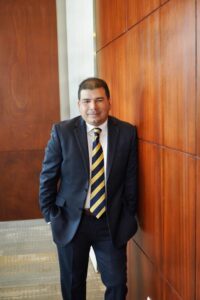
With this in mind, Fedor Vidal, CEO of Arium Salud Digital, says digital transformation in the health sector is a process that benefits other sectors whose main basis for economic investment is the population’s health and the behaviour of diseases.
The modern way of investing in health is through global and regional indicators supplied by integrated systems with international coding, making it possible to identify (in some cases in real time) how the population’s health and disease are behaving. Investments can then be targeted and tailored to each community based on systematic information.
Vidal, who served as Chief Information Officer (CIO) for Johns Hopkins Medicine International, believes that population health with integrated technology is the only way to manage a care system that is becoming ever more complex and resource-hungry. “Technology is not only changing the way healthcare is delivered; its business model will be transformed by technology.”
The pairing of health and technology has become the sector’s most useful and important complement, given the amount of information that can be obtained from the big data this field generates.
In this regard, Vidal highlights that digitalisation has had a positive impact on every industry, and in the health sector the benefits are clear in several strategic areas: greater efficiency in administrative processes, wider access to quality healthcare, democratisation of information and the interconnection of the players that make up the health system.
For the expert in technology applied to improving healthcare, these points aim to lower costs while increasing the capacity of centres with greater transparency and efficiency, putting the patient back at the centre of care.
He explained that the greatest impact on the health tourism sector has been clinical data through protocols. “The most important thing these processes must provide is the ability to clearly measure our country and providers in terms of Clinical Outcomes (or health indicators),” he said.
Health Tourism
Fedor Vidal has had a front-row seat to global changes in health, and has seen how combining technology with patient-centred care changes lives. His perspective on digital advances in health-driven tourism leads him to identify major opportunities in this branch of healthcare.
Artificial Intelligence is one of the major goals of health digitalisation, especially in relation to health tourism. According to the technology entrepreneur, the country could lead the region in health tourism care.
After a difficult year due to the effects of the COVID-19 pandemic, the country can position itself in medical care for tourists, but to achieve this, Vidal said, steps must first be taken immediately to strengthen the comparative analysis of care costs and quality of care indices (outcome data), which would be possible by digitalising clinical processes and adhering to international clinical coding protocols.
Another major impact and benefit of using artificial intelligence in the country, especially in the tourism sector, is the ease of identifying potential patients within the general tourist population through population profiles and aggregated data, making it possible to increase predictability and reduce the risks associated with caring for tourists in our hospitals.
“The common thread of this great framework is the sector’s interoperability, which can only be achieved with two major components: electronic records capable of interoperating, and international interoperability protocols and languages. In other words, for there to be effective communication between multiple people, they must identify and use a method of communication and share a common language,” he explained.
Find out more about AF comunicacion estrategica and its clients
More stories
- Multidisciplinary care: a centralised model that speeds up the early detection of cancer
- TransUnion expands Juan Camilo Badel’s remit to strengthen its growth strategy in Central America, the Dominican Republic and Mexico TSI
- Cleveland Clinic is the first centre in Ohio to perform a nipple-sparing robotic mastectomy
- DiDi boosts connections with the Metro and Cable Car of Santo Domingo