
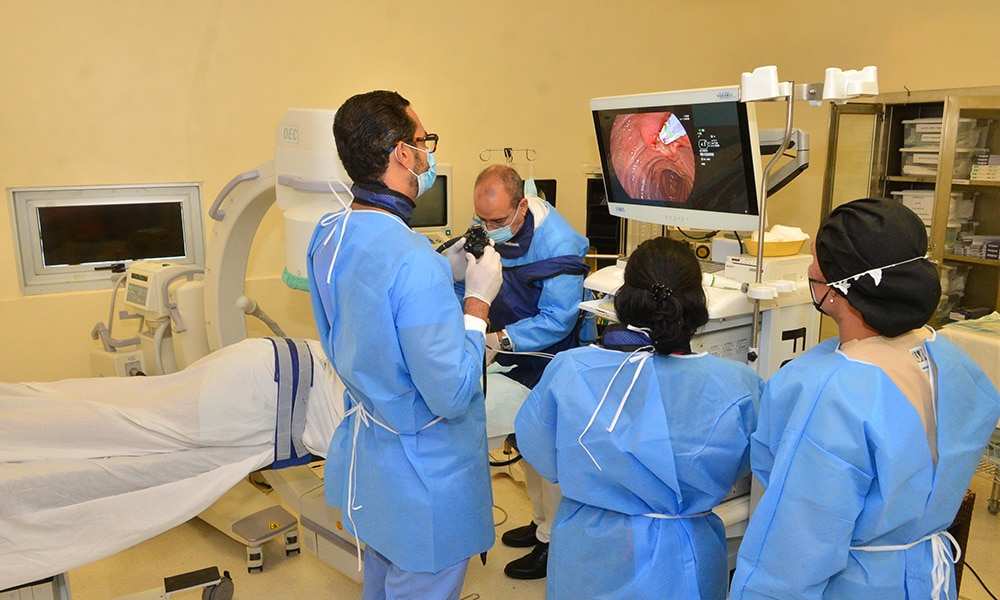
The HOMS Digestive Studies Center performed more than 8,500 procedures in 2024
3 minutes read
The Digestive Studies Center is a specialised facility for diagnosing and treating diseases of the digestive system, which are extremely common in clinical practice.
Santiago. – The Digestive Studies Center (CED) at Hospital Metropolitano de Santiago (HOMS) performed more than 8,500 procedures in 2024.
So reports Dr. Brígida Navarro de Sánchez, gastroenterologist, endoscopist and director of the CED, who also explains that the conditions most frequently detected in adults include gastritis, peptic ulcers, gastro-oesophageal reflux disease, and colonic diverticula and polyps.
According to the specialist, thanks to awareness campaigns on the early detection of colon cancer, it is increasingly common to find precancerous polyps or to detect cancer early; this is also helped by the refinement of diagnostic techniques with the development of endoscopes with advanced technology. In children, meanwhile, the most frequent diagnoses include gastritis and procedures to remove foreign bodies, for example when infants swallow an object.
The doctor describes the latest developments in the department she leads, which meets the highest standards in terms of technology and staff training, and maintains a permanent commitment to patient service.
She also explains that the centre has 18 physicians specialising in endoscopy for both adults and children, several anaesthesiologists, specialised technicians and administrative staff. It is made up of four units:
- Endoscopy unit, with 4 rooms equipped with state-of-the-art endoscopes, where most diseases of the digestive tract and their complications are diagnosed and treated.
- Biliary and pancreatic unit, with an endoscopic retrograde cholangiography suite with a C-arm; this technique combines endoscopy with radiology and is used to visualise the bile ducts inside and outside the liver and the pancreatic duct, whether to treat stones or strictures and benign and malignant tumours, which can often be resolved using this method,” says the doctor.
This unit is complemented by endoscopic ultrasound, which combines endoscopy with ultrasound and is used to examine the pancreas and neighbouring organs and to study tumours of these structures, among other indications
- Digestive motility unit, which has a ManoScan with impedance and pH monitoring for diagnosing and managing oesophageal diseases involving a movement disorder, as well as defecation disorders and anorectal conditions that require biofeedback treatment.
- Hepatology unit, which manages all liver diseases and their complications, the most common being fatty liver disease and liver cirrhosis, among others. This unit has the modern FibroScan* Expert 630 to measure steatosis and fibrosis in the liver and spleen. It is the country’s first hepatology unit, where hepatic vein catheterisation and transjugular liver biopsy are also performed and liver cancer is managed comprehensively.
The centre, which has established itself as a benchmark in the diagnosis and treatment of digestive diseases and their complications, and in its commitment to medical education, has a school of gastroenterology and every year offers refresher courses and workshops for doctors and endoscopy technicians, as well as prevention talks for the public. It has international advisers for its operations and for second-opinion patient management.
The CED is located on the fourth floor of the HOMS hospital building and also offers comfortable spaces for users and extended hours for outpatient care, with 24-hour emergency care.
About HOMS
HOMS is a pioneer in the Dominican Republic in robotic surgery and holds international certification from Accreditation Canada (ACI) as a guarantee of safety and quality of care, positioning it as a leader in health tourism in the north of the country.
More stories
- Multidisciplinary care: a centralised model that speeds up the early detection of cancer
- TransUnion expands Juan Camilo Badel’s remit to strengthen its growth strategy in Central America, the Dominican Republic and Mexico TSI
- Cleveland Clinic is the first centre in Ohio to perform a nipple-sparing robotic mastectomy
- DiDi boosts connections with the Metro and Cable Car of Santo Domingo