
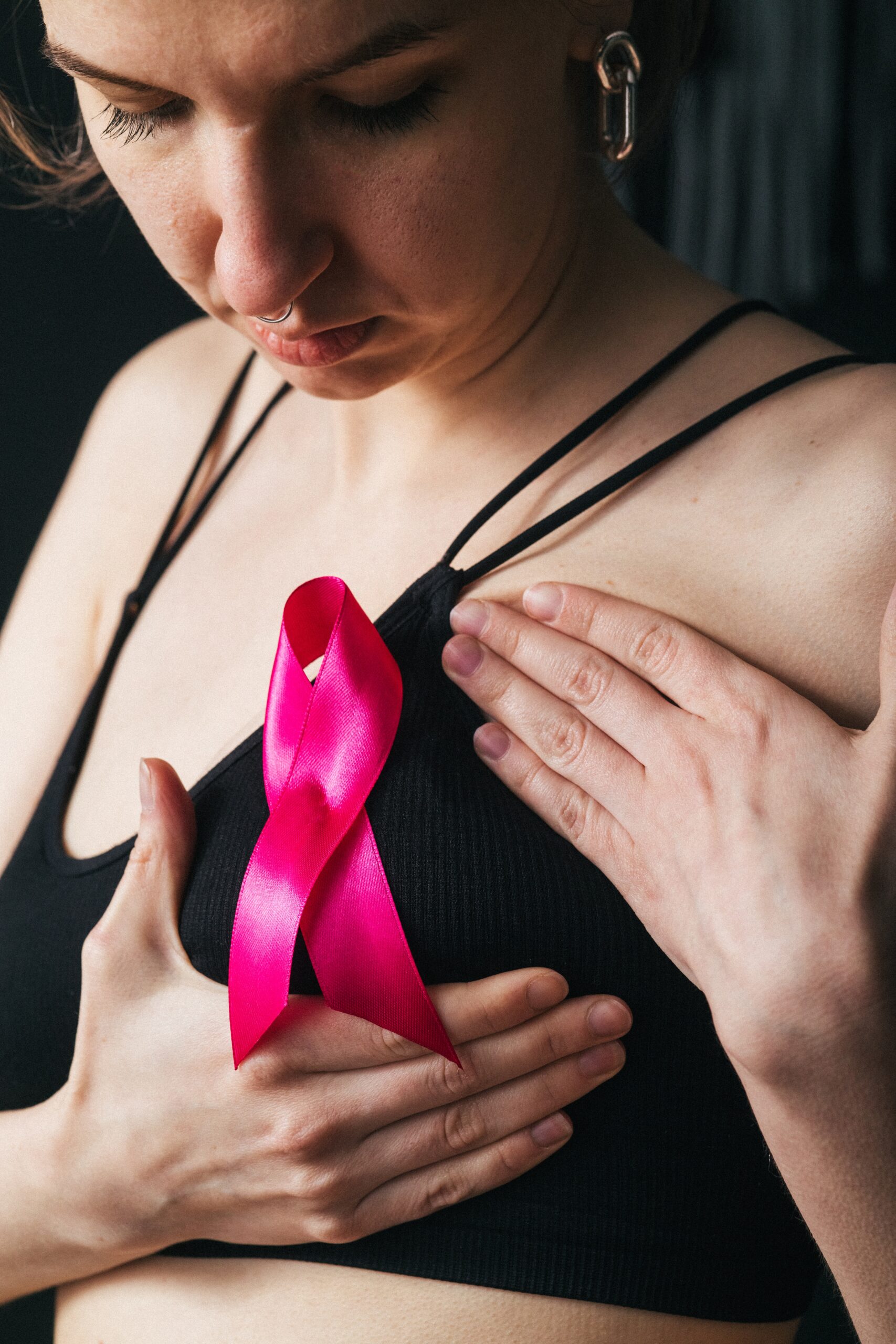
Unusual nipple discharge and redness? Take care, these may be symptoms of breast cancer
3 minutes read
- 15% of breast cancer patients have a family history of two or more first-degree relatives with the disease.
- Up to 1% of all breast cancers are diagnosed in men; the symptoms and treatment options are the same.
Santo Domingo. Unusual discharge from the nipple, thickening, redness or burning of the skin of the breast, and changes in its structure such as lumps or masses, as well as retraction and ulcers, are direct symptoms of breast cancer.
The disease is diagnosed by taking a biopsy of suspicious areas or lesions and examining the tissue under the microscope, explain IntraCare Center clinical oncologists Dr. Federica De Los Santos and Dr. Katty López.
Both specialists agree that 5% of breast cancer patients have a family history of two or more first-degree relatives with the disease, making it clear that in these cases there is a hereditary component as a risk factor, and they agree that it is the most common type of cancer in women worldwide.
Another factor associated with heredity is mutations in the BRCA 1 and 2 genes, human tumour suppressor genes that regulate the cell cycle and prevent uncontrolled proliferation, which can increase the risk of breast cancer by 5% in women who carry these mutations.
What treatments are there to fight breast cancer?
Dr. De Los Santos says that breast cancer treatment options are varied and depend on many factors.
“Broadly speaking, we can divide them into two large groups: local treatments such as surgery and radiotherapy, and systemic treatments, which include chemotherapy, endocrine therapy and monoclonal antibodies,” explains Dr. De Los Santos.
For her part, Dr. López talks about the after-effects of treatment for this disease, which can be many and are directly related to the type of treatment received. But certainly, “if the patient does not have good family and emotional support, these after-effects could be more psychological than physical”.
In the case of chemotherapy, the most common form of systemic treatment for breast cancer, nausea, vomiting, hair loss, reduced appetite, fatigue, constipation or diarrhoea and stomach pain, among others, are frequent; all medicines can bring side effects.
When is a mastectomy performed?
Whether a mastectomy is indicated depends on the grade or stage of the disease. It is usually reserved for small lesions in early disease, followed by radiotherapy, and also for locally advanced stages with lymph node involvement in the armpits after chemotherapy.
The final decision on whether to perform a mastectomy, which technique to use and when to do it should be taken jointly by all members of the medical team, including not only medical and surgical oncology but also clinical and psychological support.
De Los Santos reveals that up to 1% of all breast cancers are diagnosed in men and that the symptoms and treatment options are the same.
In this regard, Dr. López says that we are all at risk of breast cancer, men and women alike.
“It is important to note that in countries such as the United States, for every 100 breast cancer diagnoses only (one) is in a man. But men are definitely not exempt,” says Dr. López.
The IntraCare Center experts state that one of the main risk factors for this disease “is having breasts”.
IntraCare Center
IntraCare Center specialises in oncology services, palliative care, and outpatient and home chemotherapy, as well as the distribution of cytostatic drugs. Its staff are committed to improving the quality of life of adult and paediatric cancer patients through innovative equipment and technology systems that operate to the highest standards of quality and biosafety. IntraCare also offers specialist medical consultations for prevention and early detection.
More stories
- Multidisciplinary care: a centralised model that speeds up the early detection of cancer
- TransUnion expands Juan Camilo Badel’s remit to strengthen its growth strategy in Central America, the Dominican Republic and Mexico TSI
- Cleveland Clinic is the first centre in Ohio to perform a nipple-sparing robotic mastectomy
- DiDi boosts connections with the Metro and Cable Car of Santo Domingo