

Cleveland Clinic research finds unique tumour-related bacteria associated with early-onset colorectal cancer
3 minutes read
- The discovery could lead to new tests and treatments for people under 50.
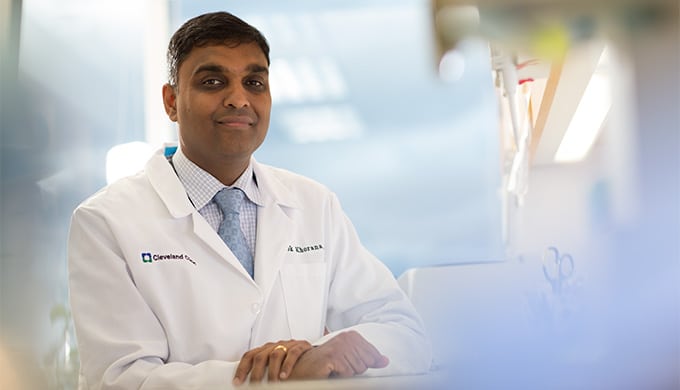
New research from Cleveland Clinic has mapped changes in the bacteria related to tumours associated with early-onset colorectal cancer to uncover potential new strategies to combat the rise of this type of cancer in people under 50.
The research reveals unique differences in the bacteria related to tumours associated with early-onset colorectal cancer. The findings, published in eBioMedicine (part of Lancet Discovery Science), could lead to new tests or treatments for this segment of the population.
According to the American Cancer Society, the incidence of and mortality from early-onset colorectal cancer have risen by 1.5% and 1.2% a year, respectively. If this trend continues, a report in the Journal of the National Cancer Institute estimates that the incidence of colon cancer would double and rectal cancer would quadruple in people under 50 by 2030.

“The unexplained rise in early-onset colorectal cancer is a major concern,” said Alok Khorana, M.D., an oncologist at Cleveland Clinic and principal investigator of the study. “Our team found that bacteria were more abundant and compositionally distinct in the tumours of early-onset patients. These insights help us better understand the causes of the disease and inform new approaches to prevention, diagnostic markers and therapeutic targets.”
This retrospective study, funded by the family of Sondra and Stephen Hardis, used genetic sequencing technology to compare tissue samples from 136 patients with early-onset colorectal cancer with those from 140 average-age patients with the disease. They identified unique tumour-related bacteria in the younger sample and found that these patients were more likely to have left-sided, rectal and advanced-stage tumours. The main bacteria associated with early-onset cancers included Akkermansia and Bacteroides.

The first authors of the paper were Shimoli Barot, M.D., of the Cleveland Clinic Cancer Institute, and Naseer Sangwan, Ph.D., of the Cleveland Clinic Lerner Research Institute. Dr. Khorana also holds the Sondra and Stephen Hardis Chair in Oncology Research.
“By detailing this microbial signature of early-onset disease, we can look for new screening biomarkers and medicines that target the related bacteria,” said Dr. Barot.
Dr. Sangwan added that “more research is needed on how lifestyle factors such as diet, medications and obesity may affect gut bacteria and contribute to early-onset colon cancers.”
About Cleveland Clinic
Cleveland Clinic is a nonprofit multispecialty academic medical centre that integrates clinical and hospital care with research and education. Located in Cleveland, Ohio, it was founded in 1921 by four renowned physicians with a vision of providing outstanding patient care based on the principles of cooperation, compassion and innovation. Cleveland Clinic has pioneered many medical breakthroughs, including coronary artery bypass surgery and the first face transplant in the United States. Among Cleveland Clinic’s 77,000 employees worldwide are more than 5,658 salaried physicians and researchers, and 19,000 registered nurses and advanced practice providers, representing 140 medical specialties and subspecialties. Cleveland Clinic is a 6,699-bed health system that includes a 173-acre main campus near downtown Cleveland, 23 hospitals, more than 275 outpatient facilities, including locations in northeast Ohio; southeast Florida; Las Vegas, Nevada; Toronto, Canada; Abu Dhabi, UAE; and London, England. In 2022, there were 12.8 million outpatient encounters, 303,000 hospital admissions and observations, and 270,000 surgeries and procedures throughout Cleveland Clinic’s health system. Patients came for treatment from every state and 185 countries.
More stories
- Multidisciplinary care: a centralised model that speeds up the early detection of cancer
- TransUnion expands Juan Camilo Badel’s remit to strengthen its growth strategy in Central America, the Dominican Republic and Mexico TSI
- Cleveland Clinic is the first centre in Ohio to perform a nipple-sparing robotic mastectomy
- DiDi boosts connections with the Metro and Cable Car of Santo Domingo