PepsiCo and the IDB extend their alliance to 2026 to drive social and economic growth in Latin America and the Caribbean
6 minutes read
- PepsiCo, its Foundation and the IDB have extended their alliance to 2026, investing around US$6 million in social and economic projects in Latin America and the Caribbean.
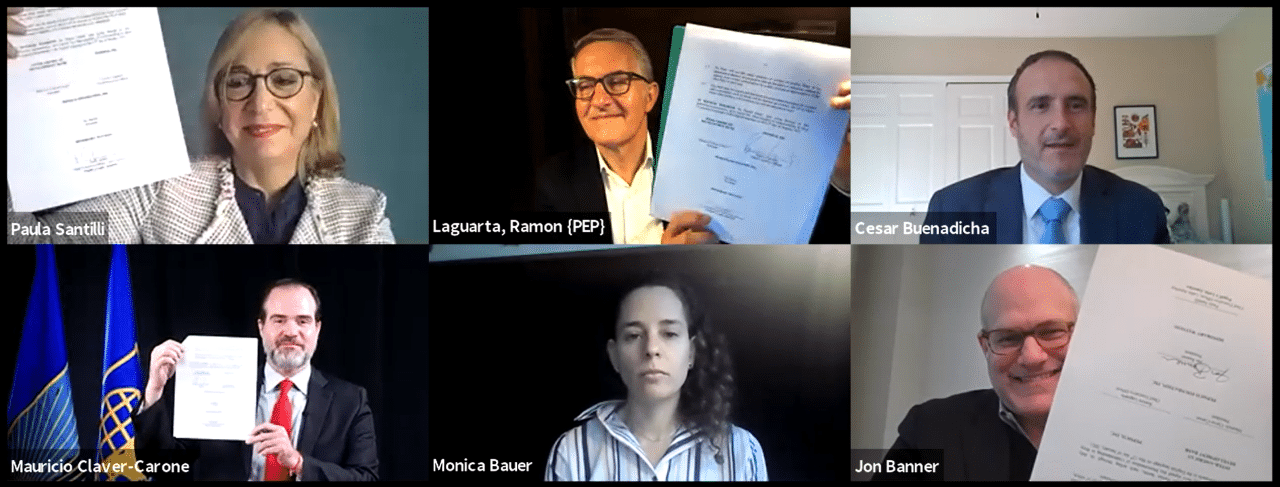
PepsiCo, the PepsiCo Foundation, the Inter-American Development Bank (IDB) and its innovation laboratory IDB Lab signed a memorandum of understanding extending their public-private partnership to 2026 to carry out programmes that drive social and economic growth in Latin America and the Caribbean. With this signing, they will complete 19 years of joint work.
For this new stage, PepsiCo and its Global Foundation are investing approximately US$6 million in projects to be implemented over the next 5 years, aimed at providing solutions in four areas of mutual interest: access to water, inclusive recycling, sustainable agriculture and economic recovery. All programmes will pay special attention to women’s empowerment.
During the virtual signing of the alliance, Ramón Laguarta, PepsiCo Chairman and CEO, said: “The alliance between PepsiCo and the IDB has been key to impacting the lives of 19 million people in Latin America and the Caribbean, investing US$17 million over 14 consecutive years in water and sanitation, nutrition, sustainable agriculture, inclusive recycling and natural disaster relief. Today, we reaffirm our commitment to the IDB for at least another 5 years, as we accelerate our efforts to make PepsiCo positive for people and the planet across the region.”
According to the Food and Agriculture Organization of the United Nations (FAO), in Latin America and the Caribbean 4.5 million women are agricultural producers who earn 24% less than men and have less access to land ownership. Women’s work in agriculture is not only paid less than men’s, it is also valued less. Research shows that if women farmers had the same access to resources as men, they could increase yields on their land by 20 to 30%, potentially reducing the number of hungry people in the world by 150 million.
PepsiCo, an agri-food company, firmly believes that offering better conditions to women in agriculture not only raises the sector’s productivity, but is also key to a more sustainable food system that generates social development.
That is why PepsiCo continually invests in programmes for women, focused on training, technical support and improving access to credit. Now, as part of the extension of this alliance, IDB Lab and PepsiCo presented the Next Generation Agriculture Fund, which aims to identify gender-related challenges in PepsiCo’s potato supply chains, initially in the Dominican Republic, Ecuador and Guatemala. The three-year programme will help improve the resilience and sustainability of supply chains in these three countries.
For her part, Paula Santilli, CEO of PepsiCo Latin America, said: “As an agri-food company, PepsiCo has seen that women’s participation in agriculture and throughout our value chain is key to achieving a sustainable food system. We are convinced that including them in agriculture is fundamental, as it will benefit them, their families and their communities. Their participation in the workforce will be crucial to reactivating the economy and growth in our region. That is how we came up with the Next Generation Agriculture Fund, through which PepsiCo and the IDB will invest US$2 million to research and take the necessary action to elevate the role of women as strategic partners in our potato supply chain.”
Highlights of the projects carried out together over this time include:
- In water and sanitation: HydroBid and AquaFund, to promote water security regionally, facilitating or improving access to drinking water for more than 15 million people since 2011.
- HydroBID is a technological innovation and data management tool that identifies potential water shortages or surpluses to improve local decision-making and prevent droughts or floods. With the support of the PepsiCo Foundation, HydroBID has been used in 12 countries, including Argentina, Brazil, Colombia, Ecuador, Guatemala, Mexico, Peru and the Dominican Republic.
- AquaFund has been implemented in Colombia, Mexico, Peru and Honduras to bring drinking water to hard-to-reach rural communities.
- In recycling: the LatitudR platform, through which PepsiCo works with public and private players in 12 countries in the region to create the conditions for the inclusion of grassroots recyclers who manage solid waste and take part in the recycling value chain. To date, more than 19,000 recyclers have benefited.
- In nutrition: the SPOON initiative, an innovative, comprehensive intervention to simultaneously reduce malnutrition and the risk of obesity in children aged 0 to 24 months living in areas of high poverty in Guatemala. To date, it has benefited 974 children.
“I am pleased to announce the strengthening of our alliance with PepsiCo and the launch of the Next Generation Agriculture Fund. Our collaboration with PepsiCo reflects the IDB’s commitment to working with strategic partners on priority issues for the region, such as access to water, rural development and women’s participation in the agricultural value chain. By working with the private sector, we can develop new and creative solutions that directly benefit local communities and women in our region,” said Mauricio Claver-Carone, President of the IDB.
About PepsiCo
PepsiCo products are enjoyed by consumers more than one billion times a day in more than 200 countries and territories around the world. PepsiCo generated more than $67 billion in net revenue in 2019, driven by a food and beverage portfolio that includes Frito-Lay, Gatorade, Pepsi-Cola, Quaker and Tropicana. PepsiCo’s product portfolio includes a wide range of enjoyable foods and beverages, including 23 brands that generate more than $1 billion each in estimated annual retail sales.
Our vision is to Be the Global Leader in Convenient Foods and Beverages by Winning with Purpose. “Winning with Purpose” reflects our ambition to win sustainably in the marketplace and embed purpose into all aspects of the business. For more information, visit www.pepsico.com
About PepsiCo Latin America
PepsiCo Latin America is a sector of the company that includes all food and beverage businesses in Latin America, covering 34 emerging and developing markets. Our business units in the sector include snacks, beverages, sweet and savoury biscuits and nutrition, which generated US$7.6 billion in net revenue in 2019. Our beverage business in the region operates through 13 major bottlers.
About the PepsiCo Foundation
Established in 1962, the PepsiCo Foundation, PepsiCo’s philanthropic arm, invests in the essential elements of a sustainable food system with the mission of supporting thriving communities. Working with non-profit organisations and experts around the world, it focuses on helping to alleviate hunger, manage water and waste responsibly, and support women as champions of nutrition from farm to family. Its efforts focus on creating tangible impact where the company operates, working with industry peers, local and international organisations and employees to achieve large-scale change on key issues of global importance. For more information, visit www.pepsico.com/sustainability/philanthropy.
About the IDB
The Inter-American Development Bank‘s mission is to improve lives. Founded in 1959, the IDB is one of the leading sources of long-term financing for economic, social and institutional development in Latin America and the Caribbean. The IDB also conducts cutting-edge research and provides policy advice, technical assistance and training to public and private sector clients throughout the region.
About IDB Lab
IDB Lab is the innovation laboratory of the IDB Group, the leading source of development financing and know-how for improving lives in Latin America and the Caribbean (LAC). IDB Lab’s purpose is to drive innovation for inclusion in the region by mobilising financing, knowledge and connections to co-create solutions capable of transforming the lives of populations vulnerable due to economic, social or environmental factors. Since 1993, IDB Lab has approved more than US$2 billion in projects in 26 LAC countries, including investments in more than 90 venture capital funds. www.bidlab.org
More stories
- Multidisciplinary care: a centralised model that speeds up the early detection of cancer
- TransUnion expands Juan Camilo Badel’s remit to strengthen its growth strategy in Central America, the Dominican Republic and Mexico TSI
- Cleveland Clinic is the first centre in Ohio to perform a nipple-sparing robotic mastectomy
- DiDi boosts connections with the Metro and Cable Car of Santo Domingo