
Do not put off your mammogram: catching it in time can save lives
3 minutes read
- A mammogram detects abnormalities in the breast before they can be felt or cause symptoms. Dr Sharon Jelena Phillips, of Mass General Brigham, points out that the test takes a few seconds and that international guidelines recommend starting at 40.
Year after year, breast cancer remains one of the greatest public health challenges for women. In the Dominican Republic the problem is serious: incidence and mortality are high, and a large share of cases are detected at advanced stages.
Why does a mammogram matter?
International recommendations vary slightly. The American Cancer Society suggests starting mammograms at 40, while the US Preventive Services Task Force (American Cancer Society) advises beginning regular screening at that same age, given the rise in cases among younger women.
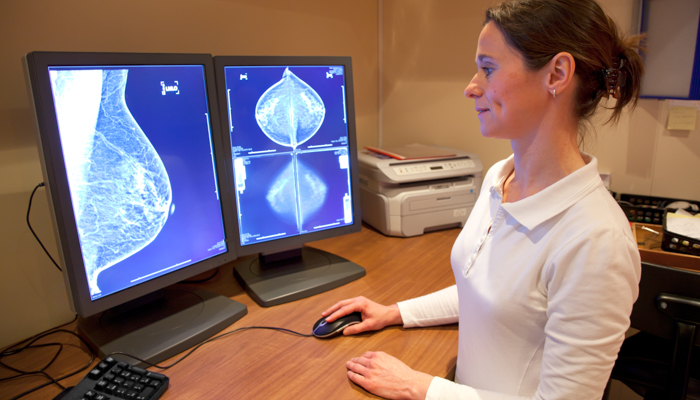
A mammogram is an X-ray image of the breasts that makes it possible to detect abnormalities before they can be felt or cause symptoms. Dr Sharon Jelena Phillips, a family medicine physician at Mass General Brigham, explains that the test can be uncomfortable, but it lasts only a few seconds and can make the difference between an early diagnosis and a late one.
“It is uncomfortable, but it is quite quick. The compression only lasts about 15 seconds,” says the specialist.
What do the figures say in the Dominican Republic?
In 2022, the estimated incidence of breast cancer was 59.1 cases per 100,000 women, and mortality around 26.4 deaths per 100,000 women.
That same year, 3,412 new cases of breast cancer were diagnosed and 1,577 people died from the disease. Presidency of the Dominican Republic
Approximately 65% of patients arrive with a diagnosis at advanced stages of the disease. Only around 43% of cases are detected at the earliest stages (I and II), while 57% are detected at more advanced stages (III and IV).
Swedish Institute for Health Economics (IHE)
Why do many women put off the mammogram?
As in other countries, the most common reasons include discomfort, fear of the diagnosis, lack of time or access to health services, and the costs associated with follow-up. On top of that, late detection — when symptoms can already be seen or felt — makes treatment far harder.
Benefits of early detection
Although there are no recent national figures giving survival rates as precise as those in Mexico, the principles remain the same:
- Diagnosing cancer at early stages greatly improves the effectiveness of treatment.
- It allows for less aggressive treatments and better chances of survival.
- It offers more therapeutic options and a better quality of life.
- Risks and considerations
- Radiation exposure in a mammogram is minimal. What usually weighs more is:
- the anxiety while waiting for the result,
- the costs if further tests are needed,
- and the logistics of getting to medical appointments.
But these risks are small compared with the potential benefit of detecting a cancer at an early stage.
Risks and considerations
Although the risk from radiation exposure is minimal, Dr Phillips mentions other factors such as anxiety before the test, the time needed to attend the appointment and the costs of follow-up. Even so, the benefits far outweigh the possible drawbacks.
A call to action
The mammogram remains a vital tool in the fight against breast cancer. It is not only prevention, it is early detection. Identifying the disease before it progresses can save lives.
Key figures in the Dominican Republic
New cases (2022): 3,412 breast cancers diagnosed.
Deaths (2022): 1,577 deaths from breast cancer.
More stories
- Multidisciplinary care: a centralised model that speeds up the early detection of cancer
- TransUnion expands Juan Camilo Badel’s remit to strengthen its growth strategy in Central America, the Dominican Republic and Mexico TSI
- Cleveland Clinic is the first centre in Ohio to perform a nipple-sparing robotic mastectomy
- DiDi boosts connections with the Metro and Cable Car of Santo Domingo