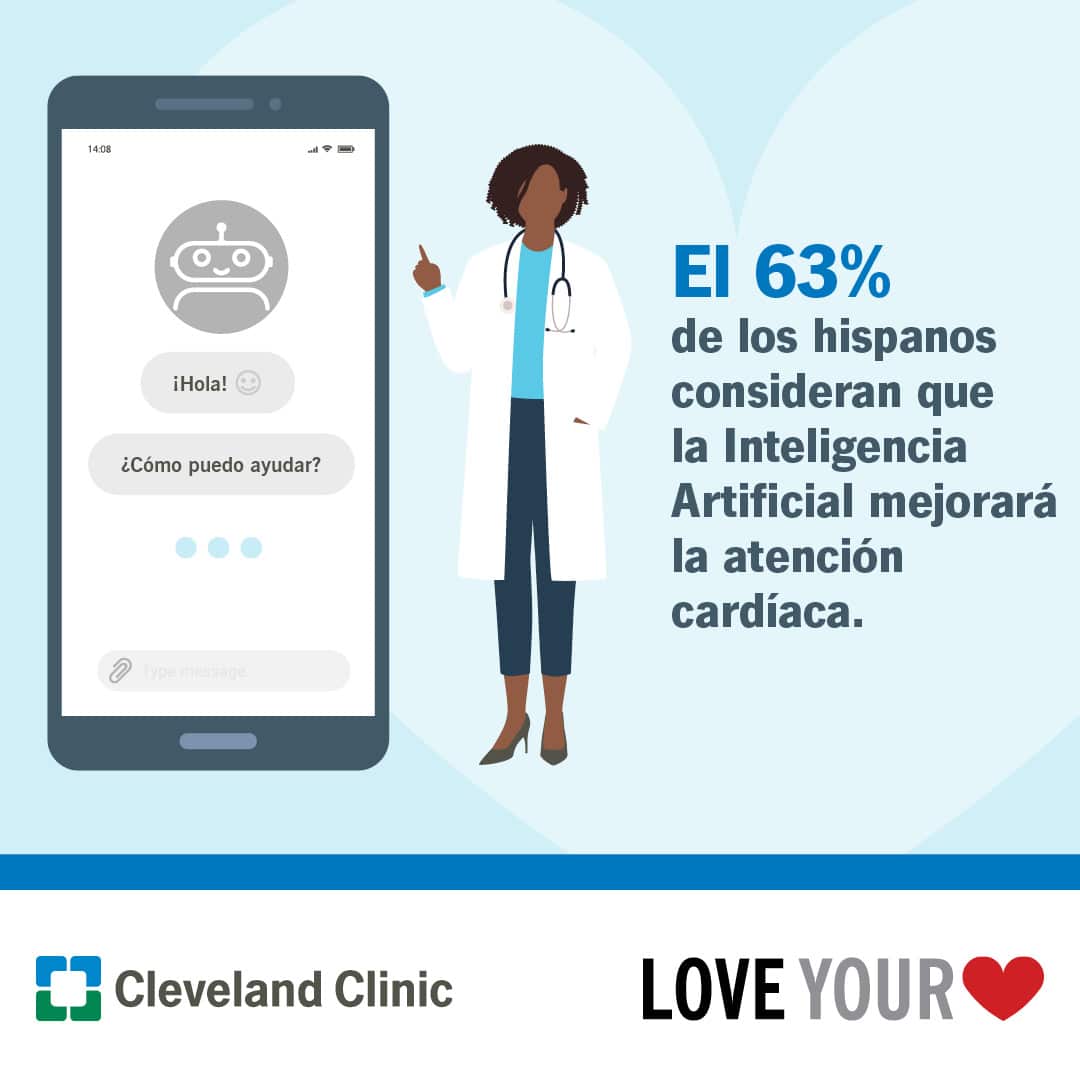
Many Hispanics rely on artificial intelligence every day to improve their health
3 minutes read
- For Heart Month, a survey reveals how much and in what ways the Hispanic community benefits from new health technologies.
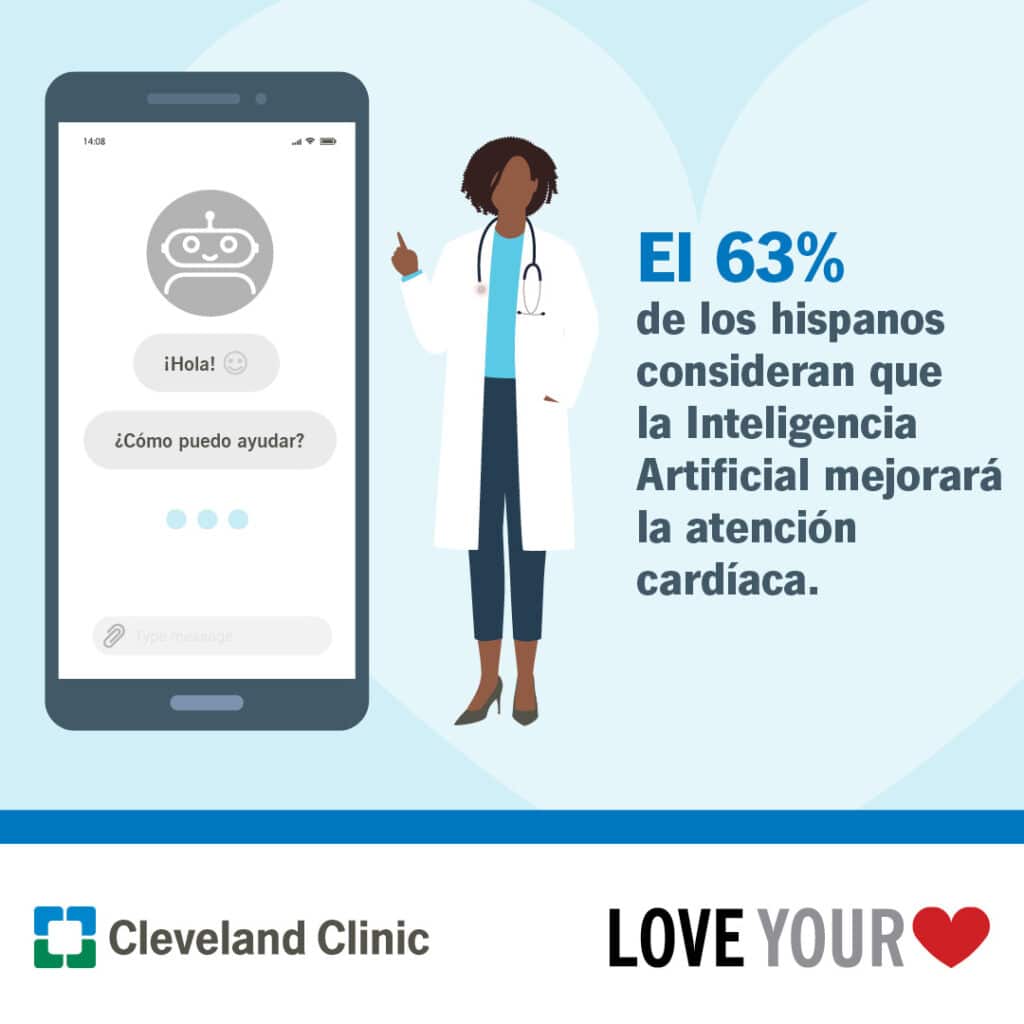
FLORIDA: 84% of Hispanics who use health monitoring technology have noticed positive changes in their physical or mental health, according to a new national survey by Cleveland Clinic for Heart Month, which is marked in February in the United States.
“It was very gratifying to see that many Hispanics are already taking advantage of the benefits of medical technology. Becoming familiar with it early on will give them a learning advantage as new applications in AI [artificial intelligence] are expected to grow in number and sophistication,” said Ricardo Hernández, MD, a cardiologist at Cleveland Clinic Florida.
The health sector is among the nine industries that use AI the most, mainly in the areas of healthcare delivery and medical testing and diagnosis.
Among the study’s findings, of the 84% of Hispanics who have noticed positive changes in their health with AI, a majority (56%) use monitoring technology, a majority (61%) count their steps every day, another majority (52%) measure their heart rate regularly and around half (43%) track their calorie intake.
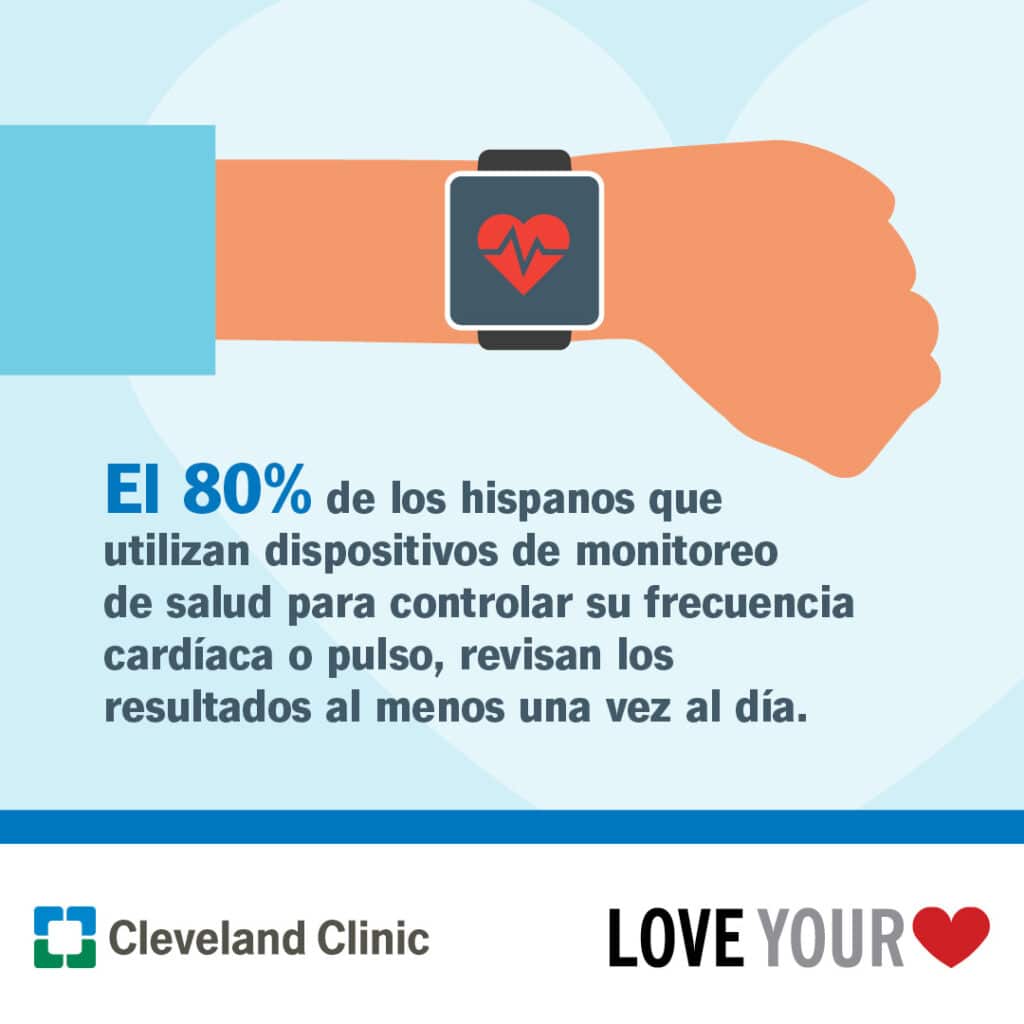
The survey reveals that among Hispanics who use health apps, a quarter (29%) feel more relaxed about their health and fitness and another quarter (27%) are more aware of the need to take time to reduce stress and relax. A majority (55%) started exercising more often, a third (34%) now pay more attention to getting enough sleep and another third (33%) are improving their eating habits.
New technologies in health are here to stay, and another of their great advantages is that they reach underserved groups and reduce racial and ethnic disparities in the quality of care.
“Although it is exciting to think about how AI could help in healthcare, it is important to bear in mind that no technology can replace the clinical judgement of a trained health professional, as the specialist has a comprehensive understanding of the patient, their environment, their psychology and even their culture,” said Dr. Ricardo Hernández.
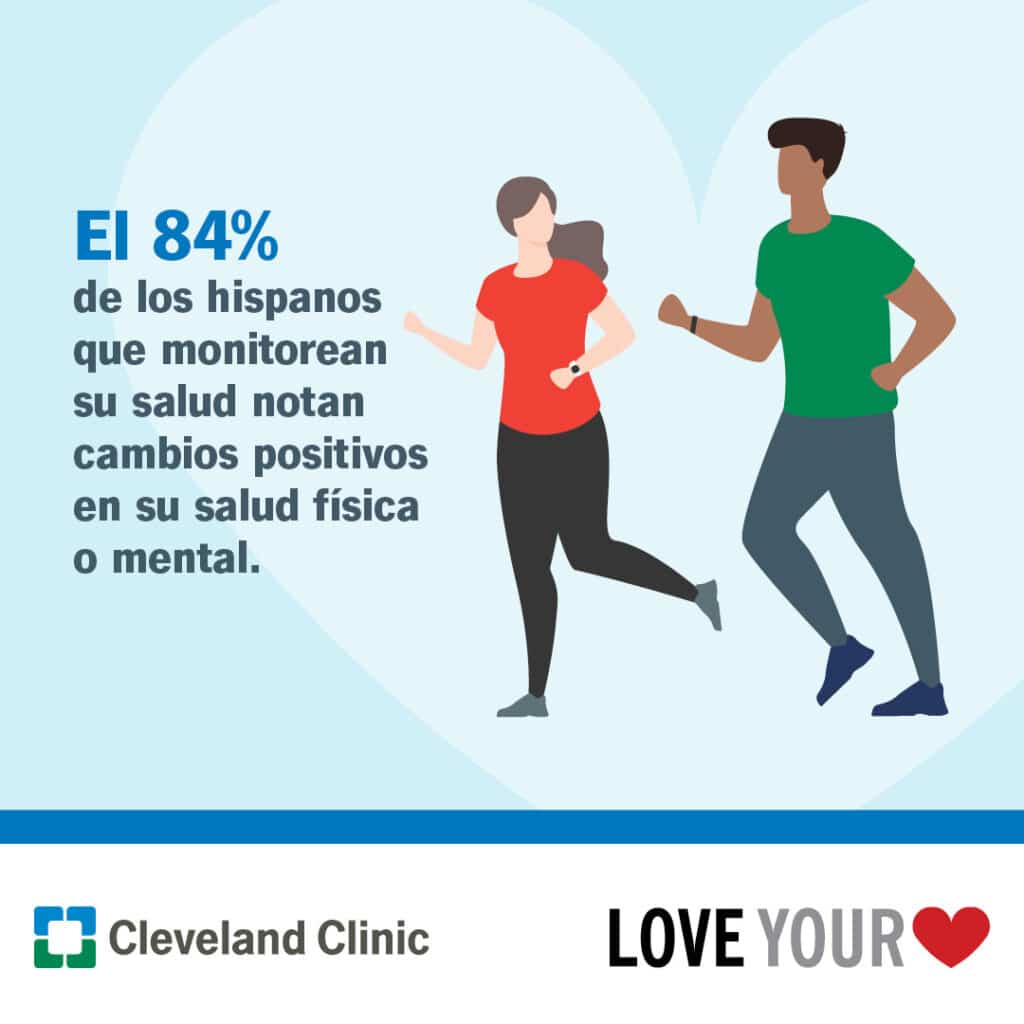
The survey was carried out as part of the Cleveland Clinic Heart, Vascular and Thoracic Institute’s “Love Your Heart” consumer education campaign to mark American Heart Month in February. Cleveland Clinic has been ranked the number one hospital in the country for cardiology and heart surgery for 29 consecutive years by U.S. News & World Report.
Methodology:
An online survey was conducted among 1,000 Americans from the general population aged 18 and over. Respondents were nationally representative in terms of age, gender, region, education, household income, race/ethnicity and urban/rural residence. An oversample of African Americans and Hispanics was collected to reach a total of N=250 for each. The online survey was conducted by Savanta and completed between 10 and 21 November 2023. The margin of error for the total sample at a 95% confidence level is +/- 3 percentage points.
About Cleveland Clinic Florida
Cleveland Clinic’s Florida region is a nonprofit, multispecialty healthcare provider that integrates clinical and hospital care with research and education. The Florida region now includes Cleveland Clinic Indian River Hospital, Cleveland Clinic Martin Health and Cleveland Clinic Weston Hospital, with five hospitals and numerous outpatient locations in Broward, Palm Beach, Martin, St. Lucie and Indian River counties. The Florida region is an integral part of Cleveland Clinic in Ohio, where outstanding patient care is based on the principles of cooperation, compassion and innovation. Cleveland Clinic physicians are experts in treating complex conditions that are difficult to diagnose.
More stories
- Multidisciplinary care: a centralised model that speeds up the early detection of cancer
- TransUnion expands Juan Camilo Badel’s remit to strengthen its growth strategy in Central America, the Dominican Republic and Mexico TSI
- Cleveland Clinic is the first centre in Ohio to perform a nipple-sparing robotic mastectomy
- DiDi boosts connections with the Metro and Cable Car of Santo Domingo