
New technologies to decarbonise the planet
5 minutes read
- By 2025, the energy consumed by data centres and sites worldwide will reach 950 and 660 billion kWh, representing 3% and 2% of total global energy consumption. On top of this growing energy demand, there is a need to move towards carbon neutrality.
2022.- The world is experiencing an unprecedented technological revolution. As digital transformation grows, energy consumption rises, posing a major challenge for the infrastructure and development of Information and Communication Technologies (ICT).
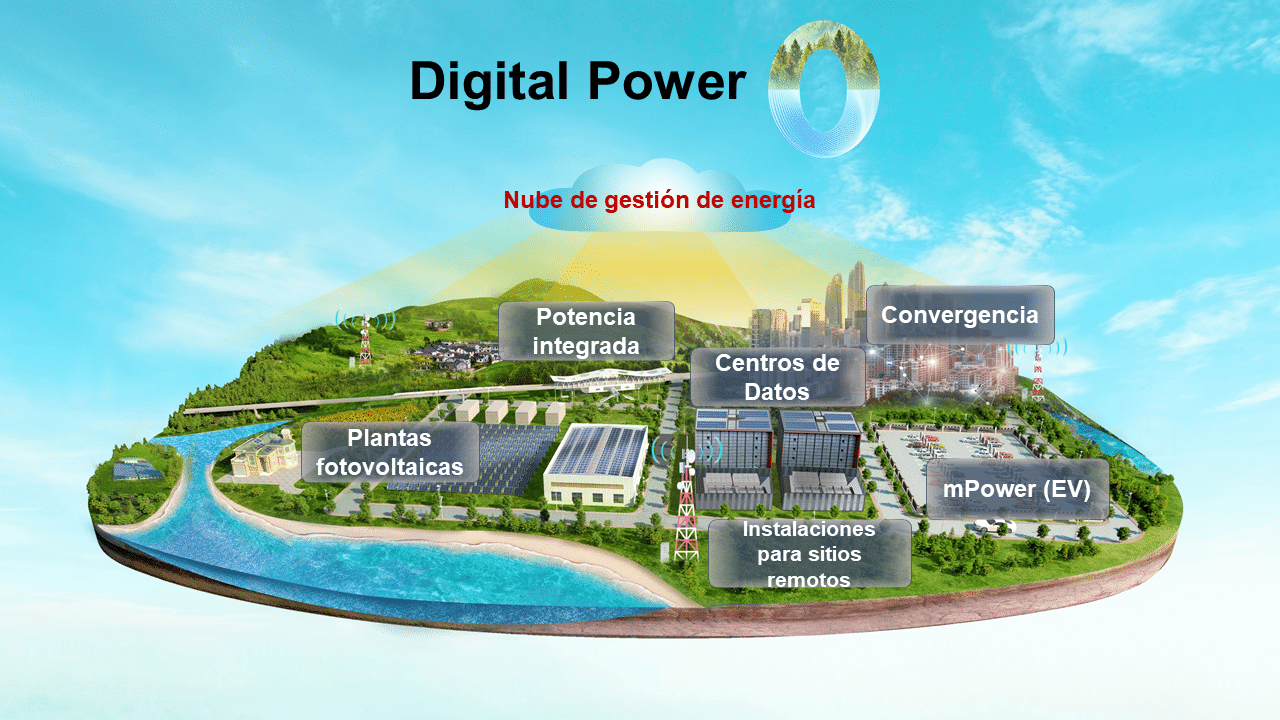
Achieving a low-carbon economy is one of the biggest challenges facing every industry today. To help companies meet their carbon neutrality goals, Huawei, through Huawei Digital Power, its division dedicated to integrating digital and power electronics technologies to develop clean energy and AI-empowered ecosystems, has driven the adoption of and innovation in clean energy generation, its digitalisation, and green ICT infrastructure.
To achieve this goal, the Chinese tech giant proposes the development of new technologies such as smart energy integration and transport electrification. Huawei Digital Power works hand in hand with its global customers and partners to build low-emission homes, buildings, factories, campuses and cities, contributing to the collective future goal of carbon neutrality.
Carbon neutrality will decisively transform energy production and consumption for future generations. In the carbon-neutral era, the entire energy industry will set low-carbon targets through clean power generation, electricity consumption and smart grid dispatch, accelerating the adoption of new technologies such as:
Clean power generation
The creation of new power systems based mainly on renewable energy, generating more watts at every photovoltaic plant from an inexhaustible, free resource such as sunlight. In Qinghai, China, Huawei’s smart PV solution helped Huanghe Hydropower Development, a subsidiary of State Power Investment Corporation Limited, build the world’s largest renewable energy base, combining wind, solar and hydropower. The base can deliver clean energy to many households via ultra-high-voltage (UHV) lines. The 2.2 GW PV project is typical, able to produce almost 5 billion kWh of clean energy every year. The agrivoltaic solution protects the ecological environment, creating an oasis in the desert.
Green ICT power infrastructure
The construction of green data centres and communication networks that are smart and low-carbon allows every watt to support more computing power. Ultimately, ICT infrastructure will become an engine for the green digital economy. Huawei’s AI-based iCooling solution enables data centres to automatically optimise their energy efficiency, reducing data centre PUE (power usage effectiveness) by 11%. This solution is deployed at Huawei’s cloud data centre in Langfang, where it saves 27 million kWh of electricity each year, or around 13,000 tonnes of carbon dioxide emissions.
Electric transport:
Digital technologies are created to redefine driving experiences and safety for electric vehicle consumers, through charging formats that allow longer journeys. This helps eliminate range anxiety, improves the charging experience, increases range per kilowatt-hour of electricity and accelerates the widespread adoption of electric vehicles
Smart energy integration:
Working with partners to integrate energy sources, reducing energy costs and improving energy efficiency through Source-Grid-Load-Storage synergy, with a focus on green energy supply, digitalised management and user-friendly consumption ecosystems aligned with low carbon emissions. For example, the Exhibition and Convention Centre of the International Low Carbon City (ILCC) in Shenzhen’s Longgang district uses Huawei’s smart distributed PV solution, energy storage solution and energy cloud to form China’s first zero-emission facility. It has installed a 1.1 MW PV system, a 2 MWh energy storage system and an integrated smart campus management system. Once operational, ILCC is expected to produce 1.27 million kWh of green electricity each year, cutting carbon emissions by 606 tonnes and essentially supplying its entire campus with the electricity it produces.
Other technologies to decarbonise the planet worth mentioning for their ability to accelerate the green transition are blockchain, 5G networks, high-speed internet, the cloud, the internet of things, artificial intelligence and virtual reality, according to the report Digital with Purpose: Delivering a SMARTer2030, produced by GeSI and Deloitte.
Low-carbon progress
Huawei’s Digital Power is committed to accelerating the pace of environmental conservation and emissions reduction. In terms of building low-carbon campuses, Huawei has deployed photovoltaic projects at its research centres in Hangzhou, Nanjing and Suzhou, as well as at its Southern Factory in Dongguan, to deliver clean energy. The campuses’ installed PV capacity is currently 19.5 MW. Annual energy yield is 19 million kWh, reducing carbon dioxide emissions by 9,000 tonnes.
These are some of the new technologies available to decarbonise the planet. On the one hand, promoting energy saving and efficiency, and on the other, committing to renewable energy, gradually replacing our dependence on oil. The road will not be easy, but the results will allow new generations to enjoy a world more aware of the importance of creating green energy. This mission is shared: we have no other planet and we must look after it.

About Huawei
Huawei is a provider of information and communications technology (ICT) infrastructure and smart devices. With integrated solutions across four key domains – telecom networks, IT, smart devices and cloud services – we are committed to bringing digital to every person, home and organisation for a fully connected, intelligent world. Our end-to-end portfolio of products, solutions and services is both competitive and secure. Through open collaboration with ecosystem partners, we create lasting value for our customers, working to empower people, enrich home life and inspire innovation in organisations of all shapes and sizes. At Huawei, innovation focuses on customer needs. We invest heavily in basic research, concentrating on technological breakthroughs that drive the world forward. We have more than 180,000 employees and operate in more than 170 countries and regions. Founded in 1987, Huawei is a private company fully owned by its employees.
For more information, visit www.huawei.com or follow us on:
Linkedin: http://www.linkedin.com/company/Huawei
Facebook: http://www.facebook.com/HuaweiLatam
YouTube: Huawei Digital Power LATAM
Find out more about AF comunicación estrategica and its clients
More stories
- Multidisciplinary care: a centralised model that speeds up the early detection of cancer
- TransUnion expands Juan Camilo Badel’s remit to strengthen its growth strategy in Central America, the Dominican Republic and Mexico TSI
- Cleveland Clinic is the first centre in Ohio to perform a nipple-sparing robotic mastectomy
- DiDi boosts connections with the Metro and Cable Car of Santo Domingo